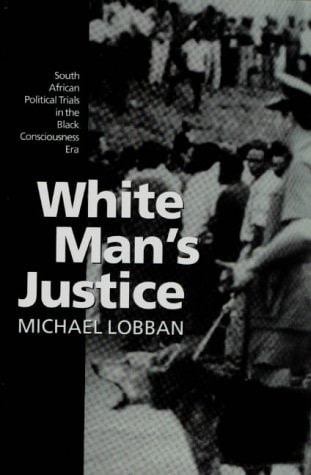
White Man's Justice: South African Political Trials in the Black Consciousness Era
0
0
As an Amazon Associate and affiliate partner, Menrva Books earns from qualifying purchases. Learn more
Author Description
This major new study examines the use of political trials by the apartheid regime in South Africa against its opponents in the 1970s, the decade when the ideology of apartheid was reaching its apogee. After tracing the early history of the South African Students Organization and the Black People's Convention, it shows how the state reacted to the threat posed by the black consciousness movement by launching a major trial of ideas, using the notorious Terrorism Act.It examines how, at the same time, the authorities sought to crack down on white dissent by prosecuting the leaders of the National Union of South African Students. By making a detailed study of trial transcripts in addition to other materials, it explores how the state sought to infiltrate and crush nascent ANC and PAC structures which were reemerging in the mid 1970s within South Africa. It shows how the prosecution policy and legal strategy of the state changed during the decade as the nature of the threats it faced altered, culminating in the trial of the leaders of the Soweto Students Representative Council in 1979 for sedition.Arguing that the political trial was perhaps the only venue where white ideology had to engage directly with black protest, this original and thought-provoking account demonstrates how the trials became platforms competing views of society and politics which give a unique insight into the conflict between the political ideals held by blacks and whites in this era.It also reveals how large a part politics played in securing the conviction of many dissidents, and the extent to which events beyond the courtroom affected the detention and torture of many activists.
Menrva's Summary
THE THESIS
How did the apartheid regime utilize the judicial system as a primary instrument of political control against the Black Consciousness movement during the 1970s? Michael Lobban, a legal scholar, analyzes the intersection of state policy and courtroom strategy to demonstrate how the South African government weaponized the Terrorism Act to suppress dissent. By examining trial transcripts and state records, the author argues that these proceedings functioned as ideological battlegrounds where the state attempted to delegitimize resistance movements while simultaneously managing internal white opposition.
THE SCOPE MAP
What You Will Find
- Analysis of the South African Students Organization and the Black People's Convention.
- Examination of the legal strategies employed under the Terrorism Act.
- Primary source evidence derived from trial transcripts and state prosecution records.
- Evaluation of the shifting state response to the ANC and PAC structures during the mid-1970s.
THE AUTHORITY PERSPECTIVE
Scholars and historians recognize this work as a rigorous examination of the legal mechanisms used to sustain apartheid. Readers frequently note the academic density of the prose, which provides a detailed look at the intersection of law and political repression in twentieth-century South Africa.
Page Count:
288
Publication Date:
1996-01-01
Publisher:
Clarendon Pr
ISBN-10:
0198260237
ISBN-13:
9780198260233
History
Law
Apartheid
South Africa
Political Crimes And Offenses
Human rights
Rule Of Law
Trials_africa
Community Tags
Similar Books