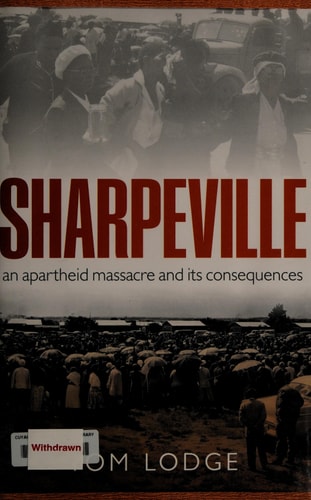
Sharpeville: An Apartheid Massacre and Its Consequences
0
0
As an Amazon Associate and affiliate partner, Menrva Books earns from qualifying purchases. Learn more
Author Description
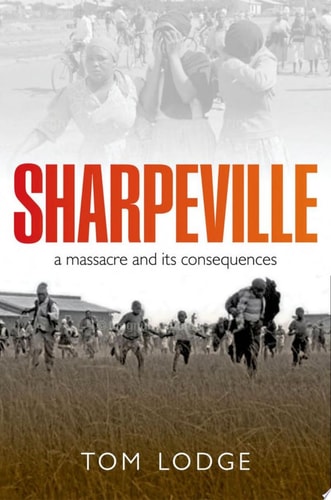
On March 21, 1960, a line of 150 white policemen fired 1344 rounds into a crowd of several thousand people assembled outside a police station, protesting against the Apartheid regime's racist "pass" laws. The gunfire left in its wake sixty-seven dead and one hundred and eighty six wounded. Most of the people who were killed were shot in the back, hit while running away.The Sharpeville Massacre, as the event has become known, marked the start of armed resistance in South Africa, and prompted worldwide condemnation of South Africa's Apartheid policies. In Sharpeville, Tom Lodge explains how and why the Massacre occurred, looking at the social and political background to the events of March 1960 as well as the long-term consequences of the shootings. Lodge offers a gripping account of the Massacre itself as well as the wider events that accompanied the tragedy, particularly the simultaneous protest in Cape Town which helped prolong the political crisis that developed in the wake of the shootings. Just as important, he sheds light on the long term consequences of these events. He explores how the Sharpeville events affected the perceptions of black and white political leadership in South Africa as well as South Africa's relationship with the rest of the world, and he describes the development of an international "Anti-Apartheid" movement in the wake of the shootings.In South Africa today, March 21 is a public holiday, Human Rights Day, and for many people, it remains a day of mourning and memorial. This book illuminates this pivotal event in South African history.
Menrva's Summary
THE THESIS
This work investigates the origins, immediate execution, and profound long-term political consequences of the 1960 Sharpeville Massacre in South Africa. Tom Lodge, a prominent historian specializing in South African politics, utilizes archival records, contemporary accounts, and political analysis to reconstruct the events of March 21, 1960. He argues that the massacre served as a critical inflection point that transitioned the anti-Apartheid movement toward armed resistance while simultaneously galvanizing international opposition to the regime.
THE SCOPE MAP
What You Will Find
- Detailed reconstruction of the events occurring at the Sharpeville police station on March 21, 1960.
- Analysis of the socio-political climate regarding the "pass" laws and the Pan Africanist Congress.
- Examination of the simultaneous protests in Cape Town and their role in the ensuing political crisis.
- Assessment of the shift in global diplomatic relations and the rise of the international Anti-Apartheid movement.
Scope Limits
- The text focuses primarily on the political and social ramifications rather than providing a comprehensive biography of all individual participants.
- It does not provide an exhaustive military history of the subsequent armed struggle beyond the immediate aftermath of the massacre.
THE AUTHORITY PERSPECTIVE
Scholars and historians frequently cite this work as a definitive, meticulously researched account of a pivotal moment in 20th-century history. Readers often note the clarity of the prose, which balances academic rigor with an accessible narrative structure suitable for both students and general history enthusiasts.
Page Count:
256
Publication Date:
2011-06-10
Publisher:
Oxford University Press
ISBN-10:
0192801856
ISBN-13:
9780192801852
History
Race Relations
Human rights
African history
Apartheid
South Africa
20th Century