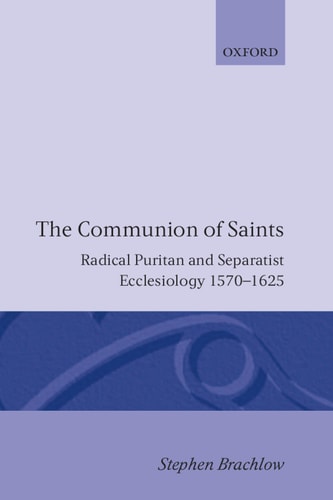
The Communion of Saints: Radical Puritan and Separatist Ecclesiology 1570-1625
0
0
As an Amazon Associate and affiliate partner, Menrva Books earns from qualifying purchases. Learn more
Author Description
This study of left-wing puritan and separatist ecclesiology in Elizabethan and Jacobean England explores such topics as the relationship of soteriology, eschatology, and puritan covenant thought to ecclesiology; radical puritan and separatist ideals about the government of gathered churches; the role of synodical authority, and the relationship between church and state. Brachlow underlines the shared ecclesiastical ideals of both radical puritans and separatist "congregationalists," recognizing that while there were presbyterian as well as congregational tendencies in each tradition, they were by no means always clear or denominationally fixed.
Menrva's Summary
THE THESIS
This study investigates the development of radical Puritan and Separatist ecclesiology in England between 1570 and 1625 to determine how these groups conceptualized the structure and authority of the gathered church. Stephen Brachlow utilizes primary source documents and historical theological treatises to analyze the intersection of covenant theology, eschatology, and political theory. He argues that the boundaries between radical Puritanism and Separatism were more fluid than traditional historiography suggests, revealing a shared commitment to specific ecclesiastical ideals that transcended denominational labels.
THE SCOPE MAP
What You Will Find
- Analysis of the relationship between soteriology, eschatology, and covenant thought in late 16th and early 17th-century England.
- Examination of the governance structures within gathered churches and the role of synodical authority.
- Investigation into the shifting dynamics between church and state during the Elizabethan and Jacobean eras.
- Comparative study of radical Puritan and Separatist congregationalist traditions.
THE AUTHORITY PERSPECTIVE
Scholars recognize this work as a significant contribution to the study of non-conformist history, noting its meticulous attention to the nuances of early modern theology. The text is frequently cited for its ability to clarify the complex, often overlapping ideological frameworks of the period.
Page Count:
304
Publication Date:
1989-01-05
Publisher:
Oxford University Press
ISBN-10:
0198267266
ISBN-13:
9780198267263
Religion
History
Ecclesiology
Great Britain
Puritans
Theology
Puritanism
Community Tags
Similar Books