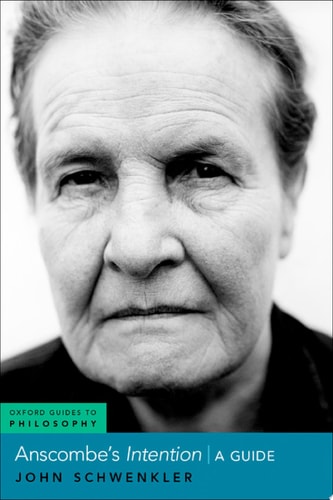
Anscombe's Intention: A Guide
0
0
As an Amazon Associate and affiliate partner, Menrva Books earns from qualifying purchases. Learn more
Author Description
Written against the background of her controversial opposition to the University of Oxford's awarding of an honorary degree to Harry S. Truman, Elizabeth Anscombe's Intention laid the groundwork she thought necessary for a proper ethical evaluation of actions like the bombing of Hiroshima and Nagasaki. The devoutly Catholic Anscombe thought that these actions made Truman a murderer, and thus unworthy of the university's honor-but that this verdict depended on an understanding of intentional action that had been widely rejected in contemporary moral philosophy. Intention was her attempt to work out that understanding and argue for its superiority over a conception of intention as an inner mental state.Though recognized universally as one of the definitive works in analytic philosophy of action, Anscombe's book is often dismissed as unsystematic or obscure, and usually read through the lens of philosophical concerns very far from her own. Schwenkler's Guide offers a careful and critical presentation of Anscombe's main lines of argument at a level appropriate to advanced undergraduates but also capable of benefiting specialists in action theory, moral philosophy, and the history of analytic philosophy. Further, it situates Intention in a context that emphasizes Anscombe's debts to Aristotle, Aquinas, and Wittgenstein, and her engagement with the work of contemporaries like Gilbert Ryle and R.M. Hare, inviting new avenues of engagement with the ideas of historically important philosophers.
Menrva's Summary
THE THESIS
This guide investigates the core arguments of Elizabeth Anscombe's seminal work, Intention, to clarify her theory of intentional action and its implications for ethical evaluation. John Schwenkler, a scholar of philosophy, provides a structured analysis that addresses the common perception of Anscombe's text as obscure or unsystematic. By situating her work within the broader context of Aristotelian, Thomistic, and Wittgensteinian thought, Schwenkler reconstructs her argument against the prevailing view of intention as a mere inner mental state.
THE SCOPE MAP
What You Will Find
- A systematic breakdown of Anscombe's primary arguments regarding intentional action.
- Contextual analysis linking Anscombe to Aristotle, Aquinas, and Wittgenstein.
- Comparative study of Anscombe's work against contemporaries like Gilbert Ryle and R.M. Hare.
Scope Limits
- The text does not provide a general introduction to all of analytic philosophy.
- It does not offer an exhaustive biography of Elizabeth Anscombe beyond her philosophical influences.
THE AUTHORITY PERSPECTIVE
Scholars and students recognize this guide as a vital resource for navigating the density of Anscombe's original prose. It is frequently cited as a necessary companion for advanced undergraduates and specialists seeking to understand the historical and philosophical foundations of action theory.
Page Count:
272
Publication Date:
2019-10-30
Publisher:
Oxford University Press
ISBN-10:
0190052023
ISBN-13:
9780190052027
Politics
Philosophy
Academic
Social Philosophy
Modern
Action theory
Movements
Ethics
Utilitarianism
Political
New Used & Rental Textbooks
Community Tags
Similar Books