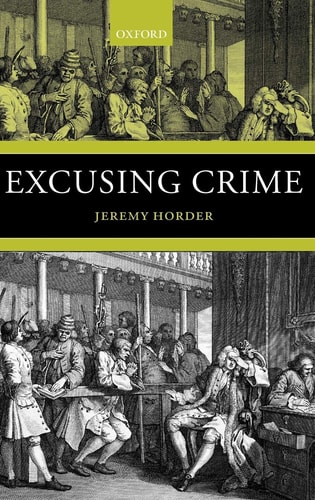
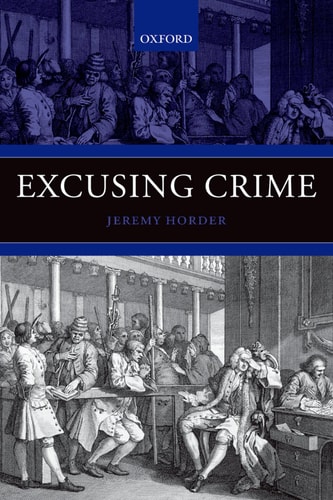
Excusing Crime
0
0
As an Amazon Associate and affiliate partner, Menrva Books earns from qualifying purchases. Learn more
Author Description
When should someone who may have intentionally or knowingly committed criminal wrongdoing be excused? Excusing Crime examines what excusing conditions are, and why familiar excuses, such as duress, are thought to fulfil those conditions. Setting himself against the 'classical' view of excuses, which has a long heritage, and is enshrined in different forms in many of the world's criminal codes, both liberal and non-liberal; Jeremy Horder argues that it is now time to move forwards. He contends that a wider range of excuses--'diminished capacity', 'due diligence' and 'demands of conscience'--should be recognised in law.
Menrva's Summary
THE THESIS
This book investigates the philosophical and legal foundations of criminal excuses to determine when individuals who commit intentional wrongdoing should be legally exonerated. Jeremy Horder, a professor of criminal law, challenges the traditional 'classical' view of excuses that dominates many international legal systems. By analyzing the limitations of current frameworks, he proposes a more expansive approach that incorporates modern understandings of human agency and moral responsibility.
THE SCOPE MAP
What You Will Find
- A critical analysis of the 'classical' theory of excuses found in global criminal codes.
- An evaluation of established defenses such as duress and their underlying conditions.
- Theoretical arguments for the inclusion of 'diminished capacity' and 'due diligence' as valid legal excuses.
- A philosophical exploration of 'demands of conscience' as a basis for criminal exculpation.
THE AUTHORITY PERSPECTIVE
Legal scholars and practitioners recognize this monograph as a significant contribution to the discourse on criminal responsibility and the evolution of legal doctrine. Readers frequently note the academic density of the prose, which is intended for an audience of legal professionals and students of jurisprudence.
Page Count:
316
Publication Date:
2004-09-30
Publisher:
Oxford University Press
ISBN-10:
0198264828
ISBN-13:
9780198264828
Non-Fiction
Philosophy
Criminal Law
Law
Legal Theory
Community Tags
Other Editions(3)
Similar Books