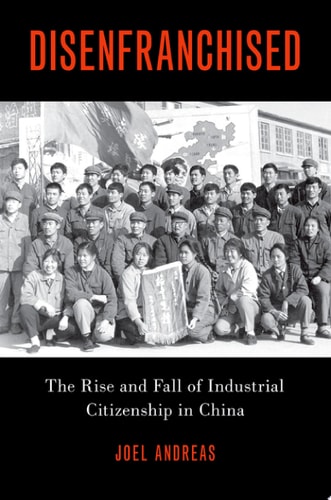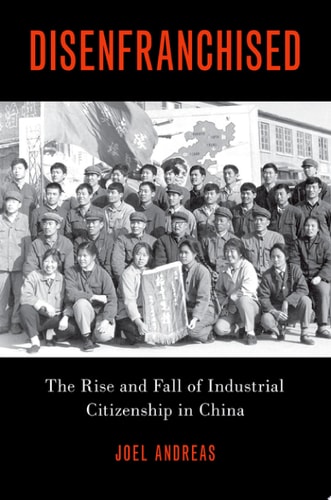
Disenfranchised: The Rise and Fall of Industrial Citizenship in China
0
0
As an Amazon Associate and affiliate partner, Menrva Books earns from qualifying purchases. Learn more
Author Description
In the decades following World War II, factories in many countries not only provided secure employment and a range of economic entitlements, but also recognized workers as legitimate stakeholders, enabling them to claim rights to participate in decision making and hold factory leaders accountable. In recent decades, as employment has become more precarious, these attributes of industrial citizenship have been eroded and workers have increasingly been reduced to hired hands. As Joel Andreas shows in Disenfranchised, no country has experienced these changes as dramatically as China. Drawing on a decade of field research, including interviews with both factory workers and managers, Andreas traces the changing political status of workers inside Chinese factories from 1949 to the present, carefully analyzing how much power they have actually had to shape their working conditions.
Menrva's Summary
THE THESIS
This book investigates the transformation of industrial citizenship in China by examining how the political status and decision-making power of factory workers have shifted from the mid-20th century to the present. Joel Andreas, a sociologist specializing in Chinese political and social structures, utilizes a framework of industrial citizenship to evaluate the decline of worker influence. He argues that the transition from a state-socialist model to a market-oriented economy has systematically stripped workers of their ability to hold management accountable, effectively reducing them to precarious laborers.
THE SCOPE MAP
What You Will Find
- Historical analysis of Chinese factory management from 1949 to the present
- Comparative framework of industrial citizenship across different economic systems
- Qualitative data derived from extensive field research and interviews
Scope Limits
- The study focuses primarily on the internal power dynamics of factories rather than broader national macroeconomic policy
- It does not provide a comprehensive history of the Chinese labor movement outside of the industrial workplace
THE AUTHORITY PERSPECTIVE
Scholars in the field of Chinese labor studies recognize this work as a rigorous empirical examination of workplace power dynamics. Readers frequently note the academic density of the prose, which provides a detailed and nuanced account of the erosion of worker rights over several decades.
Page Count:
316
Publication Date:
2019-01-01
Publisher:
Oxford University Press
ISBN-10:
0190052635
ISBN-13:
9780190052638
Industrial Relations
Sociology
Geopolitics
Social History
Chinese History
China
Labor Studies