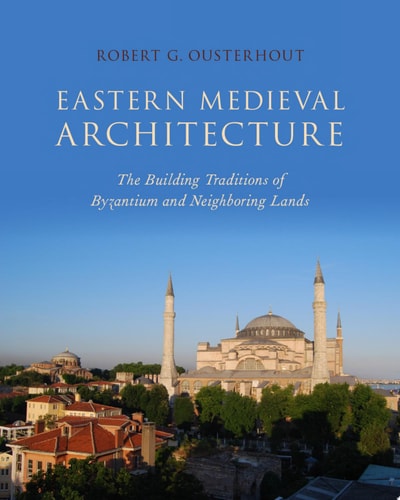
Eastern Medieval Architecture: The Building Traditions of Byzantium and Neighboring Lands
0
0
As an Amazon Associate and affiliate partner, Menrva Books earns from qualifying purchases. Learn more
Author Description
Aside from Hagia Sophia, the monuments of the Byzantine East are poorly understood today. This is in sharp contrast to the well-known architectural marvels of Western Europeâs Middle Ages. In this landmark survey, distinguished art historian Robert Ousterhout introduces readers to the rich and diverse architectural traditions of the medieval Eastern Mediterranean. The focus of the book is the Byzantine (or East Roman) Empire (324-1453 CE), with its capital in Constantinople, although the framework expands chronologically to include the foundations of Christian architecture in Late Antiquity and the legacy of Byzantine culture after the fall of Constantinople in 1453. Geographically broad as well, this study includes architectural developments in areas of Italy, the Caucasus, the Near East, the Balkans, and Russia, as well as related developments in early Islamic architecture. Alternating chapters that address chronological or regionally-based developments with thematic studies that focus on the larger cultural concerns, the book presents the architectural developments in a way that makes them accessible, interesting, and intellectually stimulating. In doing so, it also explains why medieval architecture in the East followed such a different trajectory from that of the West. Lavishly illustrated with hundreds of color photographs, maps, and line drawings, Eastern Medieval Architecture will establish Byzantine traditions to be as significant and admirable as those more familiar examples in Western Europe, and serve as an invaluable resource for anyone interested in architectural history, Byzantium, and the Middle Ages.
Menrva's Summary
THE THESIS
This work investigates the architectural traditions of the Byzantine Empire and its neighbors to explain why Eastern medieval building practices diverged from those of Western Europe. Robert G. Ousterhout, a distinguished art historian, utilizes a vast array of primary architectural evidence and historical context to construct a comprehensive framework. He argues that Byzantine architecture represents a distinct, sophisticated tradition that warrants equal status to the more widely recognized Gothic and Romanesque styles of the West.
THE SCOPE MAP
What You Will Find
- A chronological survey of Byzantine architecture from 324 to 1453 CE.
- Comparative analysis of building traditions in Italy, the Caucasus, the Near East, the Balkans, and Russia.
- Thematic studies exploring the intersection of cultural concerns and structural design.
- Integration of early Islamic architectural developments as a point of comparison.
Scope Limits
- The text focuses primarily on the Eastern Mediterranean and its immediate cultural sphere, excluding extensive analysis of Western European architectural evolution.
- It does not provide a comprehensive technical manual for modern construction, focusing instead on historical and cultural analysis.
THE AUTHORITY PERSPECTIVE
Experts recognize this volume as a foundational survey that fills a significant gap in architectural history scholarship. Readers frequently note the clarity of the prose despite the academic density of the subject matter, making it a standard reference for both students and specialists in the field.
Page Count:
809
Publication Date:
2019-01-01
Publisher:
Oxford University Press
ISBN-10:
0190058404
ISBN-13:
9780190058401
History
Architecture
Cultural History
Architecture And History
Byzantine History
Art History
Social History
Community Tags
Similar Books