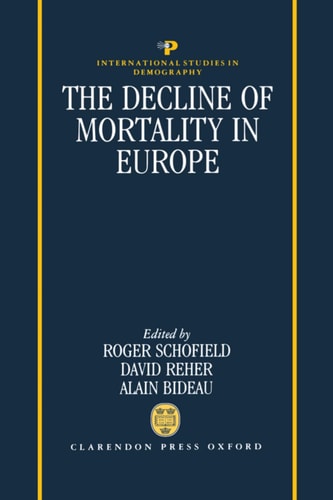
The Decline of Mortality in Europe: Seminar on "Medicine and the Decline of Mortality" : Selected Papers
0
0
As an Amazon Associate and affiliate partner, Menrva Books earns from qualifying purchases. Learn more
Author Description
This book examines the remarkable decline of mortality in Europe which began in the 19th century and continued in an uninterrupted fashion, into the early 20th century. During this period there was almost a simultaneous decline in both fertility and mortality in Europe which has long since fascinated historians and demographers. Though transition of fertility is now understood, the same cannot be said for mortality, despite its importance. The transition of mortality between 1870 and 1920 had profound effects for European and American societies. This volume brings to light the different positions held by scholars on such strategic issues as nutrition, income levels and living standards, public health, social organization, and scientific advances. This study will be of particular interest to demographers, social and economic historians, epidemiologists, and postgraduate and advanced undergraduate students of these subjects.
Menrva's Summary
THE THESIS
This volume investigates the complex factors driving the significant decline in European mortality rates between 1870 and 1920. Alain Bideau compiles selected papers from a specialized seminar to analyze why mortality rates dropped during this period, a phenomenon that remains less understood than the concurrent fertility transition. The text evaluates competing scholarly theories regarding the influence of socioeconomic and medical variables on population health.
THE SCOPE MAP
What You Will Find
- Comparative analysis of mortality trends across European nations from 1870 to 1920
- Evaluation of the impact of nutrition and income levels on life expectancy
- Assessment of public health interventions and social organization strategies
- Examination of the role of scientific and medical advancements in population survival
THE AUTHORITY PERSPECTIVE
Experts identify this collection as a specialized resource for historians and demographers focusing on the demographic transition period. Readers frequently note the academic density of the prose, which is tailored for postgraduate research and advanced historical study.
Page Count:
288
Publication Date:
1991-08-15
Publisher:
Clarendon Press
ISBN-10:
0198283288
ISBN-13:
9780198283287
History
European History
Sociology
Epidemiology
Mortality
Demography
Public Health
Community Tags
Similar Books