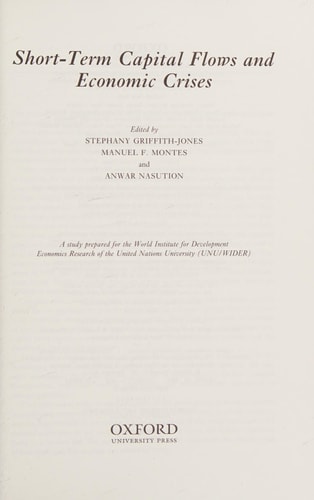
Short-Term Capital Flows and Economic Crises
0
0
As an Amazon Associate and affiliate partner, Menrva Books earns from qualifying purchases. Learn more
Author Description
The currency crises that engulfed East Asian economies in 1997 and Mexico in 1994--and their high development costs--raise a serious concern about the net benefits for developing countries of large flows of potentially reversible short-term international capital. Written by senior policy-makers and academics, the contributions to this volume examine in depth the macroeconomic and policy dilemmas confronting public authorities in the emerging economies as they deal with short-term capital movements, especially in the period before the outbreak of these crises.
Menrva's Summary
THE THESIS
This volume investigates whether the net benefits of volatile, short-term international capital flows justify the significant economic risks and development costs faced by emerging markets. The authors, a collection of senior policy-makers and academic economists, analyze the macroeconomic dilemmas and regulatory challenges that preceded the 1994 Mexican and 1997 East Asian financial crises. By synthesizing historical data and policy outcomes, the text provides a framework for understanding how developing nations can better manage the instability inherent in global capital movements.
THE SCOPE MAP
What You Will Find
- Analysis of the 1994 Mexican currency crisis and the 1997 East Asian financial collapse.
- Examination of macroeconomic policy dilemmas regarding capital account liberalization.
- Case studies detailing the impact of reversible short-term capital on national development.
- Proposed regulatory frameworks for public authorities managing international investment flows.
THE AUTHORITY PERSPECTIVE
Experts recognize this work as a foundational text for understanding the structural vulnerabilities of emerging economies during the late 20th century. Readers frequently note the academic density of the prose, which is tailored for policy analysts and students of international development.
Page Count:
328
Publication Date:
2001-04-05
Publisher:
Oxford University Press
ISBN-10:
019829686X
ISBN-13:
9780198296867
Economics
Finance
Macroeconomics
International relations
Community Tags
Other Editions(3)


Similar Books