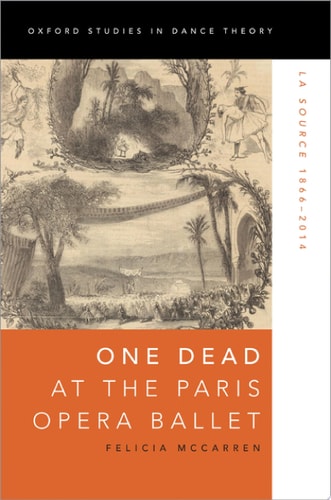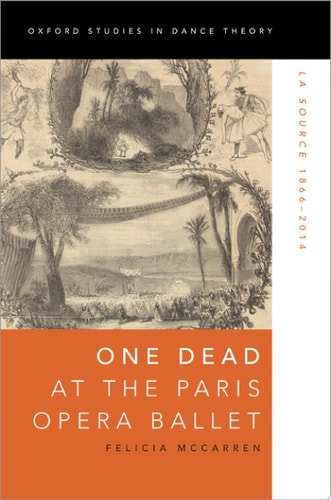
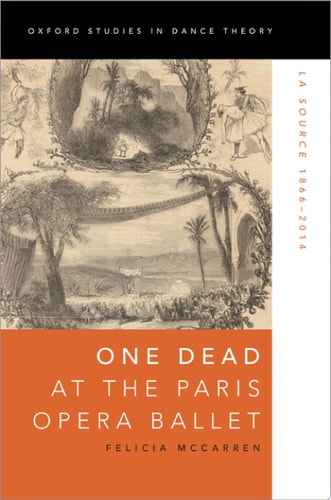
One Dead at the Paris Opera Ballet
0
0
As an Amazon Associate and affiliate partner, Menrva Books earns from qualifying purchases. Learn more
Author Description
In 1866, When The Ballet La Source Debuted, The Public At The Paris Opera May Have Been Content To Dream About Its Setting In The Verdant Caucasus, Its Exotic Circassians, Veiled Georgians, And Powerful Khan. Yet The Ballet's Botany Also Played To A Public Thinking About Ethnic And Exotic Others At The Same Time-and In The Same Ways-as They Were Thinking About Plants. Along With These Stereotypes, With A Flower Promising Hybridity In A Green Ecology, And The Death Of The Embodied Source Recuperated As A Force For Regeneration, The Ballet Can Be Read As A Fable Of Science And The Performance As Its Demonstration. Programmed For The Opening Gala Of The New Opera, The Palais Garnier, In 1875 The Ballet Reflected Not So Much A Timeless Orient As Timely Colonial Policy And Engineering In North Africa, The Management Of Water And Women. One Dead At The Paris Opera Ballet Takes Readers To Four Historic Performances, Over 150 Years, Showing How-- Through The Sacrifice Of A Feminized Nature-- La Source Represented The Biopolitics Of Sex And Race, And The Cosmopolitics Of Human And Natural Resources. Its 2011 Reinvention At The Paris Opera, Following The Adoption Of New Legislation Banning The Veil In Public Spaces, Might Have Staged Gender And Climate Justice In Sync With The Arab Spring, But Opted Instead For Luxury And Dream. Its 2014 Reprise Might Have Focused On Decolonizing The Stage Or Raising Eco-consciousness, But Exemplified The Greater Urgency Attached To Islamist Threat Rather Than Imminent Climate Catastrophe, Missing The Ballet's Historic Potential To Make Its Audience Think.
Menrva's Summary
THE THESIS
This book investigates how the ballet La Source functions as a historical and political instrument that reflects shifting ideologies regarding race, gender, and environmental management over 150 years. Felicia McCarren, a scholar of dance and performance, utilizes archival research and performance analysis to argue that the ballet serves as a site where biopolitics and colonial policy are enacted through the representation of nature and the female body. By examining specific productions from 1866 to 2014, the author demonstrates how the work mirrors the evolving societal attitudes toward human and natural resources.
THE SCOPE MAP
What You Will Find
- Historical analysis of the ballet La Source across four distinct performance eras.
- A framework for understanding the intersection of biopolitics, colonial policy, and performance art.
- Critical examination of the Palais Garnier's programming in relation to North African colonial history.
Scope Limits
- The text does not provide a general history of the Paris Opera Ballet beyond its focus on the specific production of La Source.
- It does not offer a technical manual for ballet choreography or performance techniques.
THE AUTHORITY PERSPECTIVE
Scholars in the fields of dance and cultural studies identify this work as a rigorous examination of how performance art intersects with political and environmental discourse. Readers frequently note the academic density of the prose, which requires a foundational understanding of critical theory and postcolonial history.
Page Count:
304
Publication Date:
2020-01-01
Publisher:
Oxford University Press
ISBN-10:
0190061839
ISBN-13:
9780190061838
Dance History
Performance Studies
Biopolitics
Community Tags
Other Editions(2)
Similar Books