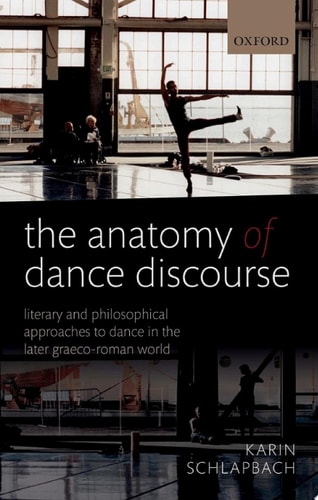
The Anatomy of Dance Discourse
0
0
As an Amazon Associate and affiliate partner, Menrva Books earns from qualifying purchases. Learn more
Author Description
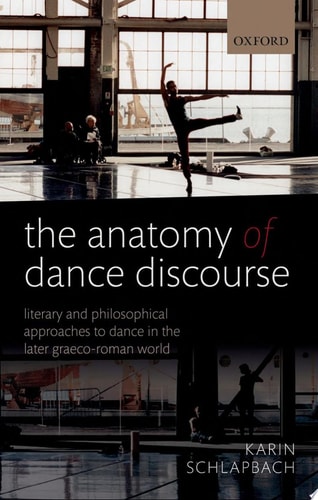
Within The Newly Thriving Field Of Ancient Greek And Roman Performance And Dance Studies, The Anatomy Of Dance Discourse Offers A Fresh And Original Perspective On Ancient Perceptions Of Dance. Focusing On The Second Century Ce, It Provides An Overview Of The Dance Discourse Of This Period And Explores The Conceptualization Of Dance Across An Array Of Different Texts, From Plutarch And Lucian Of Samosata, To The Apocryphal Acts Of John, Longus, And Apuleius. The Volume Is Divided Into Two Parts: While The Second Part Discusses Ekphraseis Of Dance Performance In Prose And Poetry Of The Roman Imperial Period, The First Delves More Deeply Into An Examination Of How Both Philosophical And Literary Treatments Of Dance Interacted With Other Areas Of Cultural Expression, Whether Language And Poetry, Rhetoric And Art, Or Philosophy And Religion. Its Distinctive Contribution Lies In This Juxtaposition Of Ancient Theorizations Of Dance And Philosophical Analyses Of The Medium With Literary Depictions Of Dance Scenes And Performances, And It Attends Not Only To The Highly Encoded Genre Of Pantomime, Which Dominated The Stage In The Roman Empire, But Also To Acrobatic, Non-representational Dances. This Twofold Nature Of Dance Sparked Highly Sophisticated Reflections On The Relationship Between Dance And Meaning In The Ancient World, And The Volume Defends The Novel Claim That In The Imperial Period It Became More And More Palpable That Dance, Unlike Painting Or Sculpture, Could Be Representational Or Not: A Performance Of Nothing But Itself. It Argues That Dance Was Understood As A Practice In Which Human Beings, Whether As Dancers Or Spectators, Are Confronted With The Irreducible Reality Of Their Own Physical Existence, Which Is Constantly Changing, And That Its Way To Cognition And Action Is Physical Experience.
Menrva's Summary
THE THESIS
How did ancient Greek and Roman authors conceptualize the relationship between dance, meaning, and physical existence during the second century CE? Karin Schlapbach, a scholar specializing in ancient performance, examines a diverse array of texts from the Roman Imperial period to reconstruct the intellectual framework surrounding dance. By analyzing works from authors such as Plutarch, Lucian, and Apuleius, she argues that dance was perceived as a unique medium capable of both representation and non-representational abstraction. The study posits that dance served as a critical site where spectators and performers engaged with the irreducible reality of physical existence and cognition through movement.
THE SCOPE MAP
What You Will Find
- Analysis of dance discourse in second-century CE literature and philosophy
- Examination of pantomime alongside acrobatic and non-representational dance forms
- Comparative study of ekphrasis in prose and poetry
- Theoretical investigation into the intersection of dance with rhetoric, religion, and art
Scope Limits
- The study is primarily confined to the Roman Imperial period
- It does not provide a comprehensive history of dance across all of antiquity
THE AUTHORITY PERSPECTIVE
Scholars in the field of classical performance studies recognize this work as a significant contribution to the understanding of ancient aesthetic theory. Readers frequently note the academic density of the prose and the rigor with which the author bridges the gap between philosophical texts and literary depictions of performance.
Page Count:
368
Publication Date:
2017-01-01
Publisher:
Oxford University Press
ISBN-10:
0192534785
ISBN-13:
9780192534781
Philosophy
History
Literary Criticism
Performance Studies
Dance History
Community Tags
Similar Books