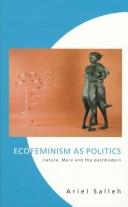
Ecofeminism as Politics
0
0
As an Amazon Associate and affiliate partner, Menrva Books earns from qualifying purchases. Learn more
Author Description
This book explores the philosophical and political challenge of ecofeminism. It shows how the ecology movement has been held back by conceptual confusion over the implications of gender difference, while much that passes in the name of feminism is actually an obstacle to ecological change and global democracy. The author argues that ecofeminism reaches beyond contemporary social movements being a political synthesis of four revolutions in one: ecology is feminism is socialism is post-colonial struggle. Informed by a critical postmodern reading of the Marxist tradition, Salleh's ecofeminism integrates discourses on science, the body, culture, nature, political economy. The book opens with a short history of the ecofeminism. Part two establishes the basis for its epistemological challenge while the third part consists of ecofeminist deconstructions of deep ecology, social ecology, eco-socialism and postmodern feminism. In the final section, Salleh suggests that a powerful way forward can be found in commonalities between ecofeminist and indigenous struggles.
Menrva's Summary
THE THESIS
This book investigates the conceptual and political limitations hindering the ecology movement and feminist progress, arguing for a synthesized approach to ecological change and global democracy. Ariel Salleh, informed by a critical postmodern reading of Marxism, contends that ecofeminism offers a political synthesis of ecology, feminism, socialism, and post-colonial struggle. The work integrates diverse discourses on science, the body, culture, nature, and political economy, challenging existing social movements and philosophical traditions. It proposes that commonalities between ecofeminist and indigenous struggles offer a potent path forward.
THE SCOPE MAP
- A brief history of ecofeminism.
- The epistemological challenges posed by ecofeminism.
- Deconstructions of deep ecology, social ecology, eco-socialism, and postmodern feminism.
- An exploration of the integration of science, the body, culture, nature, and political economy within ecofeminist thought.
- An argument for the synthesis of four revolutions: ecology, feminism, socialism, and post-colonial struggle.
- An examination of commonalities between ecofeminist and indigenous struggles.
THE AUTHORITY PERSPECTIVE
The book is presented as a foundational text within ecofeminist scholarship, offering a comprehensive theoretical framework that synthesizes ecological, feminist, socialist, and post-colonial concerns. Its critical engagement with various ecological and feminist movements, alongside its integration of Marxist and postmodern thought, positions it as a significant contribution to interdisciplinary studies. The work's exploration of epistemological challenges and its focus on the potential for common ground with indigenous struggles are key aspects highlighted in its reception. The author's argument for ecofeminism as a unifying political synthesis is central to its academic discourse.
Page Count:
256
Publication Date:
1996-01-01
ISBN-10:
1856494004
Politics
History
Philosophy
Non-Fiction
Marxism
Ecology
Political Theory
Feminism
Community Tags
Similar Books