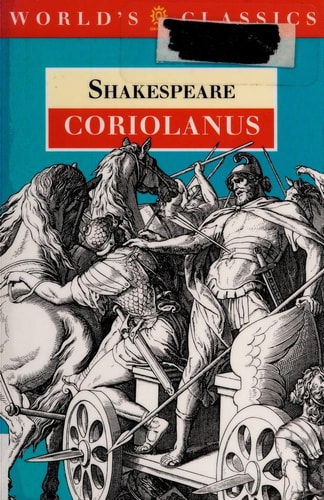
Coriolanus
0
0
As an Amazon Associate and affiliate partner, Menrva Books earns from qualifying purchases. Learn more
Author Description
After the exotic eroticism of Antony and Cleopatra, Shakespeare returned to Rome for one of his final tragedies, and the change could not have been more dramatic. Coriolanus is one of Shakespeare's harshest and most challenging studies of power, politics and masculinity, based around the life of Caius Marcius. Based on the Roman chronicles of Plutarch's Lives and Livy's History of Rome, the play is set in the early years of the Roman Republic. Its famous opening scene, particularly admired by Bertolt Brecht, portrays its citizens as starving and rebellious, and horrified by the arrogant and dismissive attitude of Caius Marcius, one of Rome's most valiant but also political naive soldiers. Spurred on by his ambitious mother Volumnia, Caius takes the city of Corioles, is renamed Coriolanus in honour of his victory, and is encouraged to run for senate. However, his contempt for the citizens, who he calls "scabs" and "musty superfluity" ultimately leads to his exile and destructive alliance with his deadly foe, Aufidius. Despite its relative unpopularity, Coriolanus is a fascinating study of both public and personal life. Its language is dense and complex, as its representation of the tensions built into the fabric of Roman political life. Yet it also contains extraordinarily intimate scenes between Coriolanus and both his mother, who ultimately proves "most mortal" to her own son, and his enemy Aufidius, whose "rapt heart" is happier to see Coriolanus than his own wife. One of Shakespeare's darker and more disturbing plays. -- Jerry Brotton
Menrva's Summary
THE PULSE
The play centers on the volatile rise and fall of Caius Marcius, a Roman general whose rigid pride and disdain for the common people trigger his own political destruction. Driven by his mother Volumnia’s ambition, Marcius seeks the consulship, yet his inability to mask his contempt for the starving citizenry leads to his banishment from Rome. He subsequently forms a vengeful alliance with his former enemy, Aufidius, to march against his own city. The narrative unfolds through a series of intense public confrontations and private domestic negotiations, culminating in a final, fatal reckoning with his own identity and loyalties.
INSIDE THE PAGES
- Exploration of the friction between aristocratic pride and populist unrest.
- Examination of the psychological influence of a dominant maternal figure.
- Use of dense, complex blank verse to mirror the protagonist's internal rigidity.
- Depiction of the Roman Republic as a volatile, class-divided political landscape.
- Analysis of the intersection between military prowess and political ineptitude.
- Inclusion of intimate, emotionally charged scenes between rivals and family members.
- Focus on the themes of betrayal, exile, and the fragility of public reputation.
- Structural reliance on historical source material from Plutarch and Livy.
THE COLLECTIVE ECHO
Discussion often centers on the play's uncompromising tone and the protagonist's lack of traditional heroic appeal. Readers frequently highlight the stark contrast between the public political maneuvering and the private, often disturbing, domestic interactions. Critics often note the play's structural focus on the mechanics of power and the inevitable collapse of those who refuse to compromise. The work remains a subject of intense analysis regarding its portrayal of class conflict and the psychological toll of rigid masculinity.
Page Count:
254
Publication Date:
1975-01-01
Publisher:
Oxford University Press
ISBN-10:
0198319215
ISBN-13:
9780198319214
Drama
Political
Plays
Schools & Teaching
New Used & Rental Textbooks
classic
Tragedy
Historical
Community Tags
Other Editions(6)

Similar Books



Reader Comments
Share Your Thoughts
No comments yet. Be the first to share your thoughts!