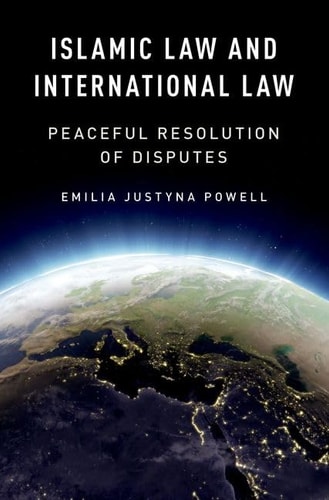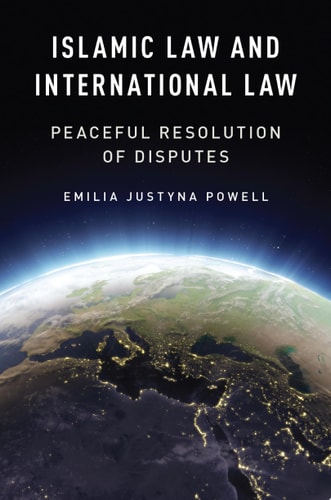
Islamic Law and International Law
0
0
As an Amazon Associate and affiliate partner, Menrva Books earns from qualifying purchases. Learn more
Author Description
There Are Twenty-nine Islamic Law States (ils) In The World Today, And Their Muslim Population Is Over 900 Million. Muslims In These Countries--and, To Some Extent, All Muslims--are Ethically, Morally, Doctrinally, Or Politically Committed To The Islamic Legal Tradition, A Unique Logic And Culture Of Justice Based On Nonconfrontational Dispute Resolution. In Islamic Law And International Law, Emilia Justyna Powell Examines The Differences And Similarities Between The Islamic Legal Tradition And International Law, Focusing In Particular On The Issue Of Conflict Management And Resolution. In Many Islamic Law States, Islamic Law Displaces Secular Law In State Governance And Shapes These Countries' International Dealings. Powell Considers Why Some Of Islamic Law States Accept International Courts While Others Avoid Them, Stressing Throughout That We Cannot Make Blanket Claims About Such States. Each Relationship Is Context-specific, Hinging On The Nature Of The Domestic Legal System. Moreover, Not All Of These States Are Islamic To The Same Degree Or In The Same Way. Secular Law And Religious Law Fuse In Different Ways In Different Domestic Legal Systems. Often, The Islamic Legal Tradition Points In One Direction, While The Western-based, Secularized International Law Points In Another. However, Powell Argues That Islamic Legal Tradition Contains Elements That Are Compatible With Modern International Law. She Marshals Original Data On The Legal Systems Structures In Thirty Islamic Law States Over The Entire Course Of The Post-world War Two Era, And She Draws From In-depth Interviews With Islamic Law Scholars And Leading Practitioners Of International Law, Including Judges Of The International Court Of Justice. Rich In Empirical Evidence, This Book Will Reshape How We Think About The Relationship Between Ils And The International System.
Menrva's Summary
THE THESIS
This book investigates the complex intersection between the Islamic legal tradition and the Western-based international legal system, specifically focusing on how domestic legal structures influence state participation in international courts. Emilia Justyna Powell, a scholar of international relations and law, utilizes original empirical data and qualitative research to challenge monolithic perceptions of Islamic Law States (ILS). She argues that the Islamic legal tradition is not inherently incompatible with international law, but rather that the relationship is contingent upon the specific domestic fusion of secular and religious legal systems within each state.
THE SCOPE MAP
What You Will Find
- Quantitative data on legal system structures across thirty Islamic Law States from the post-World War II era to the present.
- Analysis of conflict management and dispute resolution mechanisms within Islamic legal frameworks.
- Qualitative insights derived from interviews with Islamic law scholars and judges of the International Court of Justice.
Scope Limits
- The study does not provide a universal theory applicable to all Muslim-majority nations, as it emphasizes the context-specific nature of each state's legal system.
- The research focuses primarily on international court participation rather than broader sociological or theological debates within Islam.
THE AUTHORITY PERSPECTIVE
Experts and legal scholars frequently cite this work for its rigorous empirical approach to a subject often discussed through generalizations. Readers note that the text provides a necessary, nuanced framework for understanding how diverse legal traditions interact within the global international system.
Page Count:
352
Publication Date:
2019-01-01
Publisher:
Oxford University Press
ISBN-10:
0190064641
ISBN-13:
9780190064648
International Law
Conflict Resolution
International relations
Legal Studies
Islamic Law
Community Tags
Similar Books