Post-Conflict Peacebuilding: A Lexicon
0
0
As an Amazon Associate and affiliate partner, Menrva Books earns from qualifying purchases. Learn more
Author Description
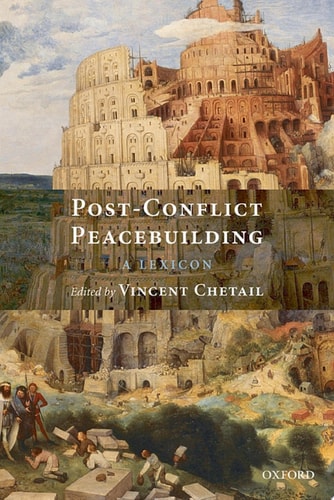
Post-Conflict Peacebuilding comes at a critical time for post-conflict peacebuilding. Its rapid move towards the top of the international political agenda has been accompanied by added scrutiny, as the international community seeks to meet the multi-dimensional challenges of building a just and sustainable peace in societies ravaged by war. Beyond the strictly operational dimension, there is considerable ambiguity in the concepts and terminology used to discuss post-conflict peacebuilding. This ambiguity undermines efforts to agree on common understandings of how peace can be most effectively 'built', thereby impeding swift, coherent action. Accordingly, this lexicon aims to clarify and illuminate the multiple facets of post-conflict peacebuilding, by presenting its major themes and trends from an analytical perspective. To this end, the book opens with a general introduction on the concept of post-conflict peacebuilding, followed by twenty-six essays on its key elements (including capacity-building, conflict transformation, reconciliation, recovery, rule of law, security sector reform, and transitional justice). Written by international experts from a range of disciplines, including political science and international relations, international law, economics, and sociology, these essays cover the whole spectrum of post-conflict peacebuilding. In reflecting a diversity of perspectives the lexicon sheds light on many different challenges associated with post-conflict peacebuilding. For each key concept a generic definition is proposed, which is then expanded through discussion of three main areas: the meaning and origin of the concept; its content and essential components; and its means of implementation, including lessons learned from past practice.
Menrva's Summary
THE THESIS
This lexicon investigates the conceptual ambiguity surrounding post-conflict peacebuilding to establish a common analytical framework for international intervention. Vincent Chetail, an expert in international law and conflict studies, compiles contributions from a multidisciplinary group of scholars and practitioners. The text addresses the lack of coherent terminology in the field by providing standardized definitions and analytical assessments of key peacebuilding components. By synthesizing perspectives from political science, economics, and sociology, the author aims to improve the efficacy of international efforts in war-torn societies.
THE SCOPE MAP
What You Will Find
- Twenty-six thematic essays covering concepts such as capacity-building, reconciliation, and transitional justice
- A structured analytical framework for each concept including origins, content, and implementation strategies
- Lessons learned from historical case studies and past international practices
Scope Limits
- The text focuses primarily on conceptual and terminological clarification rather than providing a comprehensive history of specific regional conflicts
- It does not offer a singular prescriptive policy manual but rather a lexicon of diverse academic and operational perspectives
THE AUTHORITY PERSPECTIVE
Experts identify this work as a foundational reference for students and practitioners navigating the complex vocabulary of international peacebuilding. Readers frequently note the academic density of the prose, which serves as a rigorous tool for clarifying the multifaceted challenges of post-conflict reconstruction.
Page Count:
419
Publication Date:
2009-01-01
Publisher:
OUP Oxford
ISBN-10:
0191018694
ISBN-13:
9780191018695
Economics
Conflict Resolution
International relations
Sociology
Peace studies
Professional Career & Trade
International Law