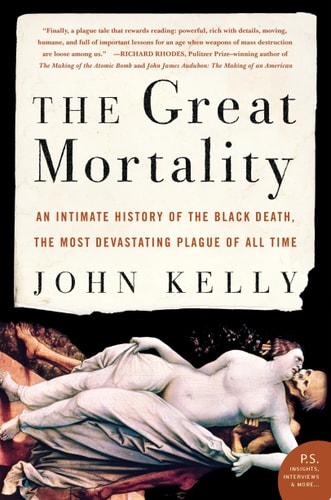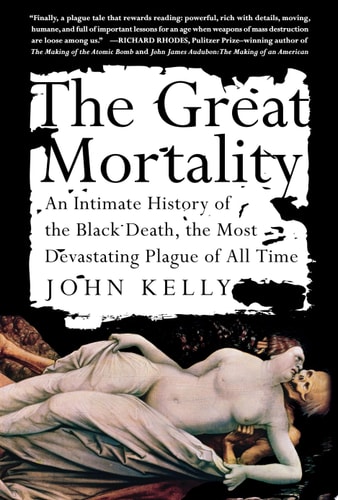
The Great Mortality : An Intimate History of the Black Death, the Most Devastating Plague of All Time
0
0
As an Amazon Associate and affiliate partner, Menrva Books earns from qualifying purchases. Learn more
Author Description
“Powerful, rich with details, moving, humane, and full of important lessons for an age when weapons of mass destruction are loose among us.” — Richard Rhodes, Pulitzer Prize-winning author of The Making of the Atomic BombThe Great Plague is one of the most compelling events in human history—even more so now, when the notion of plague has never loomed larger as a contemporary public concern.The plague that devastated Asia and Europe in the 14th century has been of never-ending interest to both scholarly and general readers. Many books on the plague rely on statistics to tell the story: how many people died; how farm output and trade declined. But statistics can’t convey what it was like to sit in Siena or Avignon and hear that a thousand people a day are dying two towns away. Or to have to chose between your own life and your duty to a mortally ill child or spouse. Or to live in a society where the bonds of blood and sentiment and law have lost all meaning, where anyone can murder or rape or plunder anyone else without fear of consequence.In The Great Mortality, author John Kelly lends an air of immediacy and intimacy to his telling of the journey of the plague as it traveled from the steppes of Russia, across Europe, and into England, killing 75 million people—one third of the known population—before it vanished.
Menrva's Summary
THE THESIS
How did the Black Death fundamentally alter the social, psychological, and physical landscape of 14th-century Eurasia? John Kelly, a seasoned historical writer, synthesizes primary source accounts, including diaries, letters, and legal records, to reconstruct the human experience of the bubonic plague. He argues that the pandemic was not merely a statistical catastrophe but a total collapse of the medieval social order that redefined human relationships and institutional authority.
THE SCOPE MAP
What You Will Find
- A chronological account of the plague's progression from the Russian steppes through Europe to England.
- Analysis of the breakdown of social, legal, and familial bonds during mass mortality events.
- Qualitative evidence drawn from contemporary personal narratives and historical chronicles.
Scope Limits
- The text does not provide a modern clinical or genetic analysis of the Yersinia pestis bacterium.
- It does not focus on the long-term economic recovery models of the post-plague era.
THE AUTHORITY PERSPECTIVE
Critics and historians frequently note the narrative focus of the text, which prioritizes individual human experience over dry demographic data. Experts highlight this work as a accessible entry point for general readers interested in the social history of the medieval period.
Page Count:
384
Publication Date:
2005-02-01
Publisher:
Harper
ISBN-10:
0060006927
ISBN-13:
9780060006921
Politics
Non-Fiction
History
Sociology
Medicine
Europe
Social History
Medical Books
Epidemiology
Community Tags
Similar Books