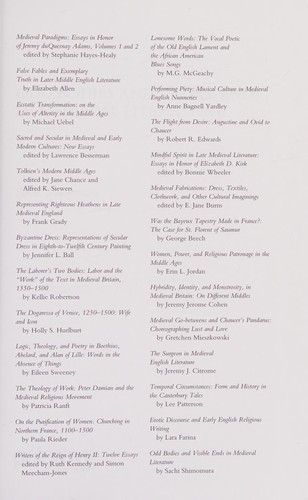
Odd Bodies and Visible Ends in Medieval Literature
0
0
As an Amazon Associate and affiliate partner, Menrva Books earns from qualifying purchases. Learn more
Author Description
This study traces how medieval audiences judge bodies (as saved or damned, human or monstrous) from Doomsday visions to beauty contests. It exposes how medieval texts manipulate narrative time and its visual evidence, like marked bodies. Anxieties about time, death, and Doomsday transform bodies (magically or literally) even in romances. Employing cultural and formalist approaches, this study breaks new ground on the historical obsession about ends and changes, reflected in different genres spanning several hundred years. It lays crucial foundations for the study of bodies - judged by deformity, gender, and other viewed perspectives - in medieval narrative and beyond.--BOOK JACKET.
Menrva's Summary
THE THESIS
THE THESIS
This study investigates how medieval audiences evaluated bodies based on their perceived salvation or damnation, monstrosity, or humanity, examining this across various genres and historical periods. Sachi Shimomura, an expert in medieval literature, utilizes cultural and formalist approaches to analyze how medieval texts manipulate narrative time and visual evidence, particularly through the representation of marked bodies. The book explores anxieties surrounding time, death, and the Last Judgment, demonstrating how these concerns could transform bodies within romances and other narrative forms. It breaks new ground by focusing on the historical obsession with ends and transformations as reflected in literature spanning several centuries, laying foundations for understanding the judgment of bodies based on deformity, gender, and other perspectives in medieval narratives and beyond.
THE SCOPE MAP
- Analysis of Doomsday visions and their impact on body judgment.
- Exploration of beauty contests and their role in medieval body perception.
- Examination of how narrative time and visual evidence, such as marked bodies, are manipulated in texts.
- Discussion of how anxieties about time, death, and Doomsday affect the portrayal of bodies.
- Application of cultural and formalist approaches to medieval literature.
- Coverage of diverse genres spanning several hundred years of medieval literature.
- Focus on the historical obsession with ends and changes as reflected in narrative.
THE AUTHORITY PERSPECTIVE
This study is recognized for its innovative approach to understanding the medieval fascination with bodies and their ultimate fate. It is noted for its rigorous application of cultural and formalist methodologies to a wide array of medieval texts, from theological visions to secular romances. The book's strength lies in its ability to connect anxieties about time and death to the visual representation and transformation of bodies within narrative. Scholars will find its exploration of how deformity, gender, and other perceived characteristics influenced the judgment of bodies in medieval literature to be a crucial contribution to the field.
Page Count:
198
Publication Date:
2006-01-01
ISBN-10:
1403972044
History
Literary Fiction
Non-Fiction
Body Studies
Art History
Literary Criticism
Cultural History
Community Tags
Similar Books














