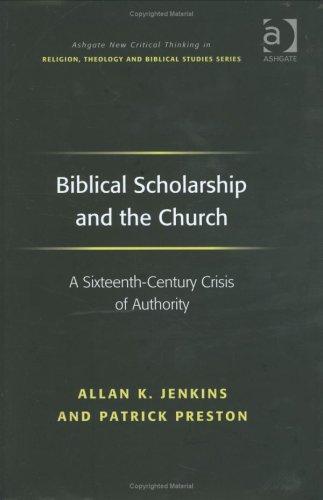
Biblical Scholarship and the Church: A Sixteenth Century Crisis of Authority
0
0
As an Amazon Associate and affiliate partner, Menrva Books earns from qualifying purchases. Learn more
Author Description
This book traces how the authority of the Septuagint and later that of the Vulgate was called into question by the return to the original languages of scripture, and how linguistic scholarship was seen to pose a challenge to the authority of the teaching and tradition of the church. It shows how issues that remained unresolved in the early church re-emerged in first half of the sixteenth century with the publication of Erasmus' Greek-Latin New Testament of 1516. After examining the differences between Erasmus and his critics, the authors contrast the situation in England, where Reformation issues were dominant, and Italy, where the authority of Rome was never in question. Focusing particularly on the dispute between Thomas More and William Tyndale in England, and between Ambrosius Catharinus and Cardinal Cajetan in Italy, this book brings together perspectives from biblical studies and church history and provides access to texts not previously translated into English.
Menrva's Summary
THE THESIS
THE THESIS
This book investigates the crisis of authority within the Church during the sixteenth century, precipitated by the rise of linguistic scholarship and the re-examination of biblical texts in their original languages.
THE SCOPE MAP
- What You Will Find:
- The challenge to the authority of the Septuagint and Vulgate translations.
- The impact of linguistic scholarship on church tradition and teaching.
- The re-emergence of early church debates in the sixteenth century, particularly with Erasmus's 1516 Greek-Latin New Testament.
- A comparative analysis of the Reformation in England and the situation in Italy.
- Detailed examination of key disputes, including Thomas More vs. William Tyndale in England, and Ambrosius Catharinus vs. Cardinal Cajetan in Italy.
- Access to previously untranslated texts.
THE AUTHORITY PERSPECTIVE
The book is recognized for its in-depth exploration of a critical period in biblical and church history, bringing together perspectives from both biblical studies and church history. It is noted for its focus on the intellectual and theological challenges posed by textual criticism and the return to original languages. The comparative approach, contrasting England and Italy, offers nuanced insights into how these issues played out in different contexts. The inclusion of translated texts further enhances its value for scholars and students.
Page Count:
340
Publication Date:
2007-01-01
ISBN-10:
0754637034
ISBN-13:
9780754637035
Non-Fiction
History
Philosophy
Religion
Theology
Church History
Linguistics
Community Tags
Similar Books