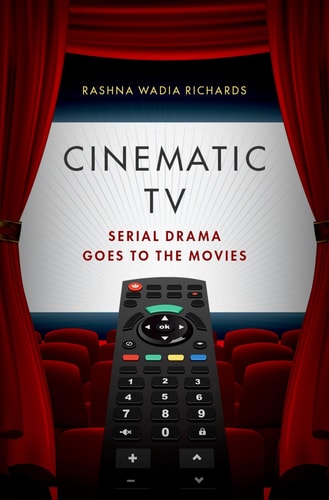
Cinematic TV: Serial Drama Goes to the Movies
0
0
As an Amazon Associate and affiliate partner, Menrva Books earns from qualifying purchases. Learn more
Author Description
For decades after its invention, television was considered by many to be culturally deficient when compared to cinema, as analyses rooted in communication studies and the social sciences tended to focus primarily on television's negative impact on consumers. More recently, however, denigration has largely been replaced by serious critical consideration of what television represents in the post-network era. Once derided as a media wasteland, TV is now praised for its visual density and complexity. In the last two decades, media scholars have often suggested that television has become cinematic. Serial dramas, in particular, are acclaimed for their imitations of cinema's formally innovative and narratively challenging conventions. But what exactly does "cinematic TV" mean?In Cinematic TV, author Rashna Wadia Richards takes up this question comprehensively, arguing that TV dramas quote, copy, and appropriate (primarily) American cinema in multiple ways and toward multiple ends. Constructing an innovative theoretical framework by combining intertextuality and memory studies, Cinematic TV focuses on four modalities of intermedial borrowings: homage, evocation, genre, and parody. Through close readings of such exemplary shows as Stranger Things, Mad Men, Damages, and Dear White People, the book demonstrates how serial dramas reproduce and rework, undermine and idolize, and, in some cases, compete with and outdo cinema.
Menrva's Summary
THE THESIS
This book investigates the precise meaning and implications of the term "cinematic TV" within the context of contemporary serial drama. Author Rashna Wadia Richards, a scholar in media studies, constructs a theoretical framework that synthesizes intertextuality and memory studies to analyze how television dramas engage with American cinema. She argues that modern serials do not merely mimic film but actively quote, copy, and appropriate cinematic conventions to reproduce, rework, or even surpass their source material.
THE SCOPE MAP
What You Will Find
- A theoretical framework based on intertextuality and memory studies.
- Analysis of four specific modalities of intermedial borrowing: homage, evocation, genre, and parody.
- Close readings of prominent serial dramas including Stranger Things, Mad Men, Damages, and Dear White People.
Scope Limits
- The analysis focuses primarily on American cinema and its influence on television.
- The study does not cover non-serial television formats or international television production outside of the American-influenced sphere.
THE AUTHORITY PERSPECTIVE
Scholars and media critics recognize this work as a significant contribution to the evolving field of television studies, particularly regarding the blurring lines between small-screen and large-screen aesthetics. Readers frequently note the academic density of the prose, which provides a rigorous methodology for analyzing the formal complexity of modern serial dramas.
Page Count:
248
Publication Date:
2021-05-14
Publisher:
Oxford University Press
ISBN-10:
0190071265
ISBN-13:
9780190071264
Movies
Shows
Motion pictures
Television programs
Media Studies
Humor & Entertainment
Television Criticism
Criticism history
Film Studies
Communication Studies
Cinematography
Television series
Television
New Used & Rental Textbooks
Community Tags
Similar Books