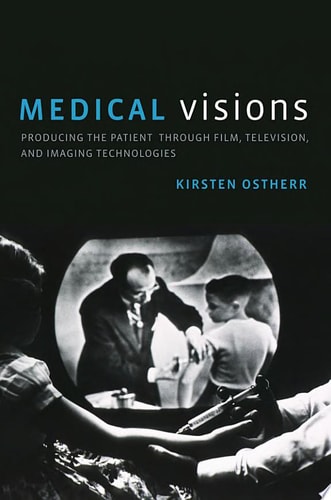
Medical Visions: Producing the Patient Through Film, Television, and Imaging Technologies
0
0
As an Amazon Associate and affiliate partner, Menrva Books earns from qualifying purchases. Learn more
Author Description
How do visual images shape the practice of medicine? What role does visual representation play in the cultivation of medical ways of seeing? And how has medicine's visual culture changed in the digital age?Kirsten Ostherr's ambitious study explores 120 years of medical image-making to explain how visual representations shape medical education and practice. Marshaling powerful, vivid examples she demonstrates how medical images created by the healthcare industry, documentary filmmakers, experimental artists, and the mass media acquire cultural meaning and influence doctors' and patients' understandings of health and disease. Her analysis proceeds chronologically, turning from the earliest experiments with medical filmmaking by the American College of Surgeons, to the place of health films in the "golden age" of instructional film in the 1960s. Ostherr considers the shift to television as the dominant medium of health education, highlighting the evolving status of realism, the techniques employed to bridge the entertainment-education divide, the role of expert consultants and sponsors, and the tradeoffs made by professionals to reach a broad audience. The rise of physician advice segments on newsmagazines forms a transition between medical dramas like Marcus Welby, MD and more recent reality shows like Boston Med and Doctor 90210. Concluding with a section on advertising and social media in the health care setting, the book ends with ten key lessons for the future of medical media.
Menrva's Summary
THE THESIS
This book investigates how visual media and imaging technologies have historically constructed the medical patient and influenced the professional practice of medicine over the last 120 years. Kirsten Ostherr, a scholar in medical humanities and media studies, utilizes a vast archive of medical films, television programs, and digital imagery to argue that visual culture is not merely a reflection of medicine but an active participant in shaping how health and disease are understood by both practitioners and the public. By examining the intersection of the healthcare industry, documentary filmmaking, and mass media, the author provides a framework for understanding the evolution of medical authority through visual representation.
THE SCOPE MAP
What You Will Find
- A chronological analysis of medical filmmaking from the American College of Surgeons to contemporary digital media.
- An examination of the transition from instructional films in the 1960s to the dominance of television medical dramas and reality programming.
- Case studies on the role of expert consultants and sponsors in bridging the divide between medical education and entertainment.
- Ten key lessons regarding the future of medical media, advertising, and social media in healthcare settings.
THE AUTHORITY PERSPECTIVE
Experts in medical humanities and media studies recognize this work as a foundational text for understanding the visual construction of the patient. Readers frequently note the academic rigor and the breadth of the historical examples provided, making it a significant contribution to the field of visual culture and medicine.
Page Count:
320
Publication Date:
2013-04-08
Publisher:
Oxford University Press
ISBN-10:
0199737258
ISBN-13:
9780199737253
History
Media Studies
Kindle Store
Sociology
Kindle eBooks
Film Studies
MEDICAL History
Medicine
Technology
Movies
Television
Categories
Community Tags
Other Editions(2)

Similar Books