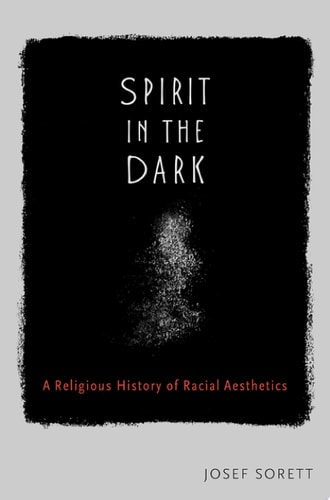
Spirit in the Dark: A Religious History of Racial Aesthetics
0
0
As an Amazon Associate and affiliate partner, Menrva Books earns from qualifying purchases. Learn more
Author Description
Most of the major black literary and cultural movements of the twentieth century have been understood and interpreted as secular, secularizing and, at times, profane. In this book, Josef Sorett demonstrates that religion was actually a formidable force within these movements, animating and organizing African American literary visions throughout the years between the New Negro Renaissance of the 1920s and the Black Arts movement of the 1960s. Sorett unveils the contours of a literary history that remained preoccupied with religion even as it was typically understood by authors, readers, and critics alike to be modern and, therefore, secular. Spirit in the Dark offers an account of the ways in which religion, especially Afro-Protestantism, remained pivotal to the ideas and aspirations of African American literature across much of the twentieth century. From the dawn of the New Negro Renaissance until the ascendance of the Black Arts movement, black writers developed a spiritual grammar for discussing race and art by drawing on terms such as "church" and "spirit" that were part of the landscape and lexicon of American religious history. Sorett demonstrates that religion and spirituality have been key categories for identifying and interpreting what was (or was not) perceived to constitute or contribute to black literature and culture. By examining figures and movements that have typically been cast as "secular," he offers theoretical insights that trouble the boundaries of what counts as "sacred" in scholarship on African American religion and culture. Ultimately, Spirit in the Dark reveals religion to be an essential ingredient, albeit one that was always questioned and contested, in the forging of an African American literary tradition.
Menrva's Summary
THE THESIS
This book investigates the often-overlooked role of religion in shaping the aesthetic and cultural movements of twentieth-century African American literature. Josef Sorett, an associate professor of religion and African American studies, challenges the prevailing secular interpretation of black literary history. By analyzing the period between the New Negro Renaissance and the Black Arts movement, he argues that Afro-Protestantism provided a foundational spiritual grammar that informed how black writers conceptualized race and artistic expression.
THE SCOPE MAP
What You Will Find
- Analysis of the New Negro Renaissance and the Black Arts movement
- Theoretical framework for the intersection of religion and secular literary aesthetics
- Examination of the lexicon of "church" and "spirit" in black intellectual discourse
Scope Limits
- The study focuses primarily on the twentieth century and does not provide an exhaustive history of black religious literature from the colonial era to the present.
THE AUTHORITY PERSPECTIVE
Scholars in the field of African American religious history frequently cite this work for its ability to complicate the binary between the sacred and the secular in literary studies. Experts highlight the text as a rigorous intervention that requires readers to reconsider the religious underpinnings of supposedly secular cultural movements.
Page Count:
307
Publication Date:
2016-01-01
Publisher:
Oxford University Press
ISBN-10:
0190606827
ISBN-13:
9780190606824
Religion
History
Politics
Literary Criticism
American History
Criticism history
English & College Success
Race Identity
Religion and literature
New Used & Rental Textbooks
Sociology
Ethnic Studies
English
African American
Community Tags
Similar Books