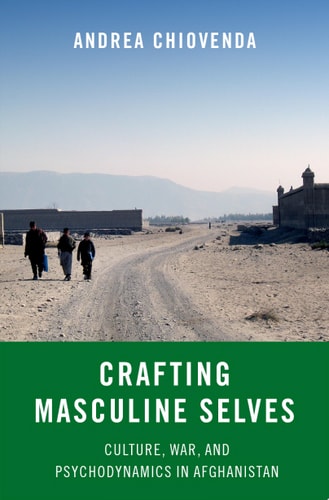
Crafting Masculine Selves: Culture, War, and Psychodynamics in Afghanistan
0
0
As an Amazon Associate and affiliate partner, Menrva Books earns from qualifying purchases. Learn more
Author Description
Against the backdrop of four decades of continuous conflict in Afghanistan, the Pashtun male protagonists of this book carry out their daily effort to internally negotiate, adjust (if at all), and respond to the very strict cultural norms and rules of masculinity that their androcentric social environment enjoins on them. Yet, in a widespread context of war, displacement, relocation, and social violence, cultural expectations and stringent tenets on how to comport oneself as a "real man" have a profound impact on the psychological equilibrium and emotional dynamics of these individuals. This book is a close investigation into these private and at times contradictory aspects of subjectivity. Stemming from five years of research in a southeastern province of Afghanistan, it presents a long-term, psychodynamic engagement with a select group of male Pashtun individuals, which results in a multilayered dive not only into their inner lives, but also into the cultural and social environment in which they live and develop. Behind the screen of what often seems like outward conformity, Andrea Chiovenda is able to point to areas of strong inner conflict, ambivalence, and rebellion, which in turn will serve as the seeds for cultural and social change. These dynamics play out in a setting in which what was considered legitimate and justifiable violence on the battlefield has now spilled over into everyday life, even among non-combatants.
Menrva's Summary
THE THESIS
This book investigates how Pashtun men in Afghanistan navigate the psychological tension between rigid cultural expectations of masculinity and the pervasive instability caused by decades of war. Andrea Chiovenda, an anthropologist, utilizes five years of ethnographic fieldwork in a southeastern Afghan province to examine the inner lives of his subjects. By applying a psychodynamic framework, he argues that outward conformity to androcentric norms often masks deep-seated ambivalence, internal conflict, and latent resistance that may eventually drive social change.
THE SCOPE MAP
What You Will Find
- Longitudinal ethnographic data collected over five years in southeastern Afghanistan.
- A psychodynamic analysis of male subjectivity within an androcentric social structure.
- Examination of how battlefield violence influences civilian social behavior and interpersonal dynamics.
Scope Limits
- The study focuses specifically on Pashtun male populations and does not claim to represent all ethnic or gender groups in Afghanistan.
- The research does not provide a comprehensive political history of the Afghan conflict, focusing instead on individual psychological outcomes.
THE AUTHORITY PERSPECTIVE
Scholars in the fields of psychological anthropology and Middle Eastern studies recognize this work for its nuanced approach to the intersection of culture and individual psyche. Readers frequently note the academic density of the prose, which provides a rigorous look at the lived experiences of men in conflict-affected regions.
Page Count:
274
Publication Date:
2019-11-18
Publisher:
Oxford University Press
ISBN-10:
0190073551
ISBN-13:
9780190073558
Politics
Psychology
Asia history
Military Technology
New Used & Rental Textbooks
Abuse
Gender Studies
Family relationships
Child Abuse
Sociology
Cultural
Middle Eastern
Anthropology
Anthropology - Cultural
Engineering
Afghanistan
Community Tags
Similar Books