The Southern Key
0
0
As an Amazon Associate and affiliate partner, Menrva Books earns from qualifying purchases. Learn more
Author Description
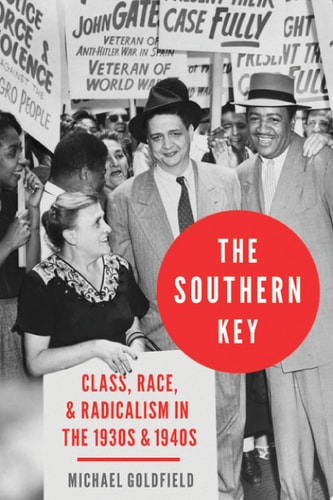
The Golden Key To Understanding The Last 75 Years Of American Political Development, The Eminent Labor Relations Scholar Michael Goldfield Argues, Lies In The Contests Between Labor And Capital In The American South During The 1930s And 1940s. Labor Agitation And Unionization Efforts In The South In The New Deal Era Were Extensive And Bitterly Fought, And Ranged Across All Of The Major Industries Of The Region. In The Southern Key, Goldfield Charts The Rise Of Labor Activism In Each And Then Examines How And Why Labor Organizers Struggled So Mightily In The Region. Drawing From Meticulous And Unprecedented Archival Material And Detailed Data On Four Core Industries-textiles, Timber, Coal Mining, And Steel-he Argues That Much Of What Is Important In American Politics And Society Today Was Largely Shaped By The Successes And Failures Of The Labor Movements Of The 1930s And 1940s. Most Notably, Goldfield Shows How The Broad-based Failure To Organize The South During This Period Made It What It Is Today. He Contends That This Early Defeat For Labor Unions Not Only Contributed To The Exploitation Of Race And Right-wing Demagoguery In The South, But Has Also Led To A Decline In Unionization, Growing Economic Inequality, And An Inability To Confront And Dismantle White Supremacy Throughout The Us. A Sweeping Account Of Southern Political Economy In The New Deal Era, The Southern Key Challenges The Established Historiography To Tell A Tale Of Race, Radicalism, And Betrayal That Will Reshape Our Understanding Of Why America Developed So Differently From Other Advanced Industrial Nations Over The Course Of The Last Century.
Menrva's Summary
THE THESIS
The core question investigated is how the failure of labor unionization in the American South during the 1930s and 1940s fundamentally shaped the trajectory of American political and economic development over the last 75 years. Michael Goldfield, a scholar of labor relations, utilizes extensive archival research and quantitative data to argue that the defeat of these movements solidified economic inequality, entrenched right-wing demagoguery, and hindered efforts to dismantle white supremacy. By examining the specific industrial conflicts of the New Deal era, the author posits that the South's political landscape serves as the primary explanation for why the United States diverged from other industrialized nations in its social and labor policies.
THE SCOPE MAP
What You Will Find
- Detailed analysis of labor activism in the textile, timber, coal mining, and steel industries.
- A historical framework connecting 1930s labor failures to contemporary American political polarization.
- An examination of the intersection between racial politics, radicalism, and union organizing.
Scope Limits
- The study focuses primarily on the 1930s and 1940s, rather than providing a comprehensive history of the entire 20th century.
- The analysis is geographically constrained to the American South.
THE AUTHORITY PERSPECTIVE
Experts recognize this work as a rigorous contribution to labor history that challenges established historiographical narratives regarding the New Deal era. Readers frequently note the academic density of the prose and the depth of the archival evidence presented by the author.
Page Count:
512
Publication Date:
2020-01-01
Publisher:
Oxford University Press
ISBN-10:
0190079339
ISBN-13:
9780190079338
Economics
History
Sociology
Labor Studies
American History
Community Tags
Similar Books