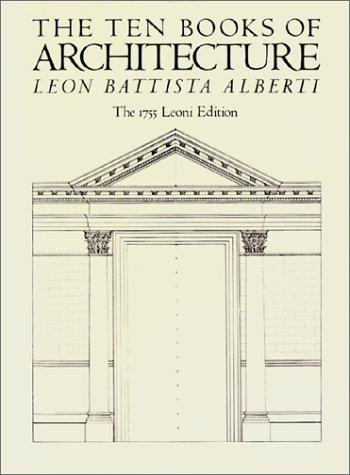
The Ten Books of Architecture
0
0
As an Amazon Associate and affiliate partner, Menrva Books earns from qualifying purchases. Learn more
Author Description
Leon Battista Alberti's "De re aedificatoria" (Ten Books on Building) is a seminal work of Renaissance architectural theory, first published in 1485. Written in Latin and modeled on Vitruvius's earlier treatise, it was the first major architectural book of the Renaissance. Alberti, a true Renaissance man, was a humanist, artist, architect, poet, priest, cryptographer, linguist, philosopher, and general polymath. He dedicated his work to Pope Nicholas V, and it is believed to have been a source of inspiration for many of the greatest architects of the period, including Brunelleschi and Bramante. The "Ten Books" cover a vast range of topics, from the choice of site and the materials of construction to the design of public and private buildings, including temples, theaters, and palaces. Alberti also discusses the aesthetic principles of beauty, proportion, and ornament, and the relationship between architecture and the other arts. This edition is a complete and unabridged translation of Alberti's masterpiece.
Menrva's Summary
THE THESIS
The Ten Books of Architecture is a foundational text that seeks to codify the principles of classical architecture for Renaissance architects and patrons.
THE SCOPE MAP
- What You Will Find:
- A comprehensive treatise on architectural theory and practice, drawing heavily on Vitruvius.
- Detailed discussions on building materials, construction techniques, and the properties of different types of structures.
- Exploration of aesthetic principles, including proportion, symmetry, and ornament.
- Analysis of various building types, from temples and public buildings to private residences.
- Guidance on the role of the architect and the relationship between architecture, mathematics, and the arts.
- A systematic approach to understanding and applying architectural knowledge.
THE AUTHORITY PERSPECTIVE
Leon Battista Alberti's "De re aedificatoria" is widely recognized as a seminal work in architectural theory, deeply influencing Renaissance architects and urban planners. Its systematic approach, rooted in classical precedent, provided a theoretical framework that shaped architectural education and practice for centuries. The text is valued for its comprehensive scope, covering not only design but also construction and the philosophical underpinnings of architecture. Its enduring legacy lies in its role in reviving and reinterpreting classical architectural ideals for a new era.
Page Count:
336
Publication Date:
1987-01-01
ISBN-10:
0486252396
ISBN-13:
9780486252391
Non-Fiction
Architecture
History
Art History
Community Tags
Similar Books














