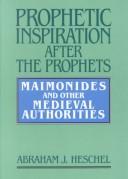
Prophetic Inspiration After the Prophets
0
0
As an Amazon Associate and affiliate partner, Menrva Books earns from qualifying purchases. Learn more
Author Description
In his lifetime, the late Abraham Joshua Heschel was celebrated as a profound religious thinker, an eloquent writer on Hasidism, a modern prophet who led civil rights marches. All of these eclipsed his reputation as a first-rate scholar of Jewish thought; since his death his work has gradually emerged from behind his fame. Central among his interests was the nature of the direct experience of God, either mystically or prophetically. While his work on the ancient Israelite prophets is well known, his studies of prophetic inspiration among Jewish scholars of the Middle Ages is not, in part because it exists in article form and in part because these articles were written in Hebrew. The standard Jewish view is that prophecy ended with the ancient prophets, somewhere early in the Second Temple era. Heschel demonstrated that this view is not altogether accurate. Belief in the possibility of continued prophetic inspiration, and in its actual occurrence - appear throughout much of the medieval period, and even in modern times.
Menrva's Summary
THE THESIS
The nature of direct divine experience and the continuation of prophetic inspiration beyond the biblical era. Abraham Joshua Heschel, a renowned religious thinker and scholar, investigates the traditional Jewish view that prophecy ceased with the ancient prophets. He challenges this notion by demonstrating the persistent belief in and occurrence of prophetic inspiration throughout the medieval period and into modern times, drawing upon his extensive scholarship of Jewish thought.
THE SCOPE MAP
- Exploration of the direct experience of God, both mystical and prophetic.
- Analysis of prophetic inspiration among Jewish scholars of the Middle Ages.
- Examination of the traditional Jewish view that prophecy ended with ancient prophets.
- Demonstration of the continued belief in and occurrence of prophetic inspiration.
- Discussion of prophetic inspiration in the Second Temple era and beyond.
- Scholarly articles written in Hebrew, now made accessible.
- Heschel's reputation as a first-rate scholar of Jewish thought.
THE AUTHORITY PERSPECTIVE
This work is regarded as a significant scholarly contribution by Abraham Joshua Heschel, a figure celebrated for his profound religious thought and activism. The book delves into a less-explored aspect of his scholarship, focusing on prophetic inspiration in medieval and modern Jewish thought. It challenges established views by presenting evidence for the continuation of prophetic experiences beyond the classical prophetic period. The material suggests a dense, analytical text for those interested in Jewish intellectual history and theology.
Page Count:
157
Publication Date:
1996-01-01
ISBN-10:
0881253464
Non-Fiction
History
Religion
Community Tags
Similar Books