Pagan Christmas
0
0
As an Amazon Associate and affiliate partner, Menrva Books earns from qualifying purchases. Learn more
Author Description
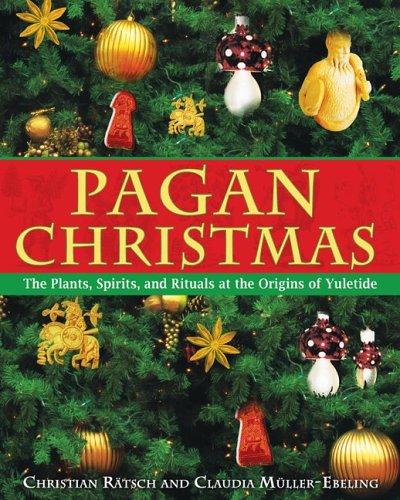
The day on which many commemorate the birth of Christ has its origins in pagan rituals that center on tree worship, agriculture, magic, and social exchange. But Christmas is no ordinary folk observance. It is an evolving feast that over the centuries has absorbed elements from cultures all over the world--practices that give plants and plant spirits pride of place. In fact, the symbolic use of plants at Christmas effectively transforms the modern-day living room into a place of shamanic ritual. Christian Rätsch and Claudia Müller-Ebeling show how the ancient meaning of the botanical elements of Christmas provides a unique view of the religion that existed in Europe before the introduction of Christianity. The fir tree was originally revered as the sacred World Tree in northern Europe. When the church was unable to drive the tree cult out of people’s consciousness, it incorporated the fir tree by dedicating it to the Christ child. Father Christmas in his red-and-white suit, who flies through the sky in a sleigh drawn by reindeer, has his mythological roots in the shamanic reindeer-herding tribes of arctic Europe and Siberia. These northern shamans used the hallucinogenic fly agaric mushroom, which is red and white, to make their soul flights to the other world. Apples, which figure heavily in Christmas baking, are symbols of the sun god Apollo, so they find a natural place at winter solstice celebrations of the return of the sun. In fact, the authors contend that the emphasis of Christmas on green plants and the promise of the return of life in the dead of winter is just an adaptation of the pagan winter solstice celebration.
Menrva's Summary
THE THESIS
The origins of Christmas are deeply rooted in pre-Christian pagan rituals, particularly those involving tree worship, agriculture, and social exchange. This book explores how the modern Christmas feast has evolved by absorbing elements from diverse global cultures, with a significant emphasis on plants and plant spirits, transforming contemporary living rooms into spaces of symbolic shamanic ritual. The authors detail how ancient botanical traditions offer a unique perspective on pre-Christian European religions, illustrating how elements like the fir tree, Father Christmas, and apples were integrated into Christian celebrations.
THE SCOPE MAP
- Exploration of the fir tree's original reverence as the World Tree in northern Europe.
- Analysis of Father Christmas's mythological roots in arctic European and Siberian shamanic traditions.
- Discussion of the fly agaric mushroom's role in shamanic soul flights.
- Examination of apples as symbols of the sun god Apollo and their connection to winter solstice celebrations.
- Argument that Christmas's focus on green plants and the promise of life's return is an adaptation of pagan winter solstice observances.
- Insight into the religion and practices in Europe before the introduction of Christianity.
THE AUTHORITY PERSPECTIVE
The book offers a scholarly examination of the pagan roots of Christmas traditions, tracing the symbolic significance of plants and ancient rituals that have been incorporated into the modern celebration. It provides a unique perspective on pre-Christian European beliefs by analyzing the historical and mythological origins of Christmas elements. The authors' research highlights how the church adapted existing pagan practices, such as tree worship and solstice celebrations, to integrate them into Christian observance. This work suggests that the enduring appeal of Christmas lies partly in its deep connection to ancient cycles of nature and renewal.
Page Count:
224
Publication Date:
2006-01-01
ISBN-10:
1594770921
ISBN-13:
9781594770920
History
Non-Fiction
Religion
Community Tags
Similar Books














