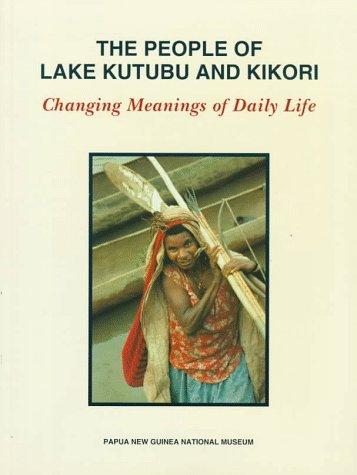
The People of Lake Kutubu and Kikori
0
0
As an Amazon Associate and affiliate partner, Menrva Books earns from qualifying purchases. Learn more
Author Description
In the 1980s, a commercially viable amount of oil was discovered near Lake Kutubu in the Southern Highlands of Papua New Guinea. Following the completion of a pipeline from the oil field to a marine terminal in the Gulf of Papua south of Kikori in 1992, the Kutubu Petroleum Development Project became the country's first oil producer. The activity accompanying the oil project has dramatically affected life in the Project area, but social change did not begin with the discovery of oil. By the time the pipeline was completed, people living in the Lake Kutubu and Kikori areas had experienced decades of government influence and Christian mission activity. This book offers a picture of daily life in the Project area during 1991 and 1992. Settlement and residence patterns, subsistence, material culture, and exchange, all show a mixture of old and new. A consideration of the changing meanings that objects and customs have for the local people give a sense of contemporary life not only in the Project area but in rural Papua New Guinea in general.
Menrva's Summary
THE THESIS
The discovery of oil in Papua New Guinea's Southern Highlands prompts an examination of its impact on local communities. This book provides a detailed look at daily life in the Kutubu and Kikori regions during 1991 and 1992, a period marked by the development of the country's first oil producer. It explores how settlement patterns, subsistence practices, material culture, and exchange systems have evolved under the influence of both traditional ways and external forces like government and missionary activity. The study considers the shifting significance of objects and customs for the local people, offering insights into contemporary rural life in Papua New Guinea.
THE SCOPE MAP
- What You Will Find:
- Detailed ethnographic observations of daily life in the Kutubu and Kikori Project areas during 1991-1992.
- Analysis of settlement and residence patterns, subsistence strategies, and material culture.
- Examination of exchange systems and their transformation.
- Consideration of the changing meanings of objects and customs for local populations.
- Insights into the broader social changes occurring in rural Papua New Guinea.
THE AUTHORITY PERSPECTIVE
This study offers a nuanced perspective on the social transformations occurring in Papua New Guinea due to resource development. The detailed ethnographic approach provides a rich picture of how traditional practices interact with modern influences. The book is likely to be of interest to anthropologists, sociologists, and those studying the impacts of the oil industry on developing nations. It presents a grounded view of contemporary life in a specific region, contributing to a broader understanding of cultural change.
Page Count:
96
Publication Date:
1995-01-01
ISBN-10:
9980855134
ISBN-13:
9789980855138
Politics
Non-Fiction
History
Science
Oil Industry
Anthropology
Social change
Social Science
Community Tags
Similar Books