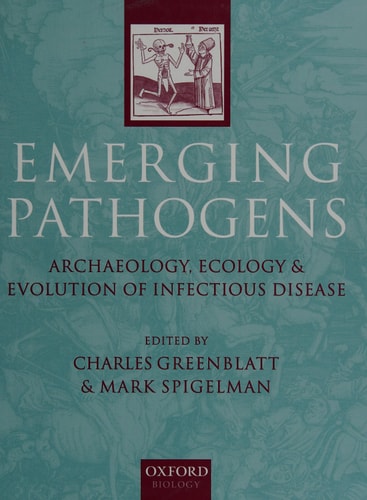
Emerging Pathogens: The Archaeology, Ecology and Evolution of Infectious Disease
0
0
As an Amazon Associate and affiliate partner, Menrva Books earns from qualifying purchases. Learn more
Author Description
Many ancient diseases with a long history of afflicting mankind such as Tuberculosis and Malaria are now re-emerging. Greenblatt brings together palaeopathologists, anthropologists, molecular biologists and modern infectious disease specialists to examine this phenomenon. New techniques allow us to detect ancient pathogen DNA and other biomarkers, in effect the chemical 'signatures' of pathogens. These tools could help us develop strategies to combat modern emerging diseases. This book focuses on ancient diseases in order to bridge the gap that has for so long separated today's infectious disease specialists and the paleopathologists who describe pathology in skeletal and mummified remains. Linking these two research communities, and incorporating the views of anthropologists, medical ecologists and molecular/evolutionary biologists, will hopefully promote a better understanding of this complex but vitally important field. A more thorough knowledge of the impact of evolutionary biology on the host-parasite relationship may even enable us to coexist with these pathogenic micro-organisms. The book is intended to stimulate debate and co-operation between infectious disease specialists, medical researchers, archaeologists, anthropologists and evolutionary biologists.
Menrva's Summary
THE THESIS
This book investigates the intersection of ancient disease history and modern pathogen evolution to determine how understanding historical infections can inform contemporary public health strategies. Charles Greenblatt, a distinguished expert in public health, synthesizes research from palaeopathologists, molecular biologists, and anthropologists to bridge the gap between historical skeletal analysis and modern infectious disease management. By examining the chemical signatures and DNA of ancient pathogens, the text argues that a deeper grasp of host-parasite co-evolution is necessary to mitigate the threat of re-emerging diseases.
THE SCOPE MAP
What You Will Find
- Analysis of ancient pathogen DNA and chemical biomarkers in skeletal and mummified remains.
- Interdisciplinary frameworks connecting paleopathology with modern infectious disease clinical practice.
- Case studies on the historical trajectory of diseases such as Tuberculosis and Malaria.
- Methodologies for applying evolutionary biology to the study of host-parasite relationships.
THE AUTHORITY PERSPECTIVE
Experts recognize this work as a vital interdisciplinary bridge that successfully aligns archaeological findings with contemporary medical research. Readers frequently note the academic density of the prose, which serves as a foundational resource for professionals working across the fields of public health and evolutionary biology.
Page Count:
264
Publication Date:
2003-04-10
Publisher:
Oxford University Press
ISBN-10:
0198509006
ISBN-13:
9780198509004
Science
Archaeology
Infectious Disease
Microorganisms
Paleopathology
Public Health
Epidemiology
Communicable Diseases
Evolutionary Biology
Anthropology
Medicine
Community Tags
Similar Books