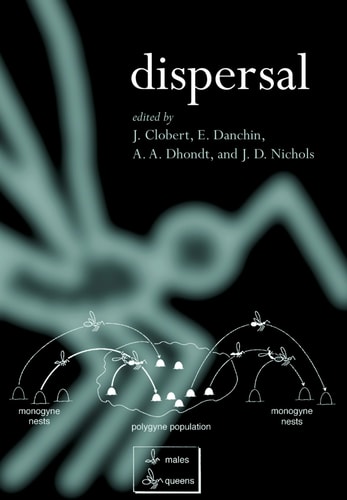
Dispersal
0
0
As an Amazon Associate and affiliate partner, Menrva Books earns from qualifying purchases. Learn more
Author Description
Habitat fragmentation and global climate change are the two major environmental threats to the persistence of species and ecosystems. The probability of a species surviving such changes is strongly dependent on its ability to track shifts in the environmental, either by moving between patches of habitat or by rapidly adapting to local condition. These 'solutions' to problems posed by environmental change depend on dispersal propensity, motivating our desire to better understand this important behavior. This book is a comprehensive overview of the new developments in the study of dispersal and the state-of-the-art research on the evolution of this trait. The causes, mechanisms, and consequences of dispersal at the individual, population, and species levels are considered. The promise of new techniques and models for studying dispersal, drawn from molecular biology and demography is explored. Perspectives on the study of dispersal are offered from evolution, conservation biology, and genetics. Throughout the book, theoretical approaches are combined with empirical data, and examples are included from as wide a range of species as possible.
Menrva's Summary
THE THESIS
This book investigates the critical role of dispersal as a primary mechanism for species survival in the face of habitat fragmentation and global climate change. Author James D. Nichols, alongside contributors, synthesizes current research to explain how individual movement and adaptation strategies dictate the persistence of populations. The text provides a rigorous framework for understanding the evolutionary drivers of dispersal and its broader ecological consequences in a rapidly changing world.
THE SCOPE MAP
What You Will Find
- Analysis of dispersal mechanisms at individual, population, and species levels
- Integration of molecular biology and demographic modeling techniques
- Empirical data sets drawn from a diverse range of global species
- Theoretical perspectives on the intersection of genetics and conservation biology
THE AUTHORITY PERSPECTIVE
Experts recognize this volume as a comprehensive synthesis of dispersal ecology, suitable for researchers and graduate-level students in the biological sciences. Readers frequently note the technical density of the prose, which effectively bridges the gap between theoretical modeling and field-based empirical observation.
Page Count:
480
Publication Date:
2001-05-03
Publisher:
Oxford University Press
ISBN-10:
0198506597
ISBN-13:
9780198506591
Science
Conservation Biology
Ecology
Biology
Evolutionary Biology
Community Tags
Similar Books