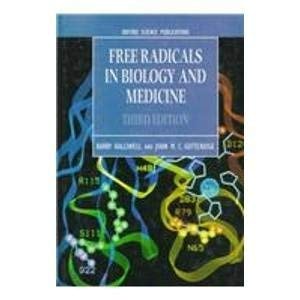
Free Radicals in Biology and Medicine
0
0
As an Amazon Associate and affiliate partner, Menrva Books earns from qualifying purchases. Learn more
Author Description
Since the publication of the second edition of Free Radicals in Biology and Medicine in 1989, the techniques of modern molecular, cellular, and structural biology have provided new data that have transformed scientific thinking about topics within free radical research. New reactive species, such as peroxynitrite, have been discovered to have a role in biological systems. Much of this third edition has been completely re-written and what remains from the second has been thoroughly updated. There are new chapters on antioxidant defence systems in bacteria, plants, and animals; the detection of free radicals; the role of antioxidants in aging, nutrition, disease, and therapy; and a new appendix on molecular biology. The chapter on oxidative stress and its consequences includes the damage and repair of DNA, proteins, and lipids, cytokines, and cell death (both apoptosis and necrosis).Free radicals and other reactive species are now implicated in a wide range and number of diseases and the third edition covers their role in hypertension, diabetes, lung damage, cystic fibrosis, nervous system disorders, viral infections, and cancer. The toxicology chapter has been updated to include new sections on complex mixtures, nitro- and azo-compounds, and radiation. Erythrocytes, chloroplasts, the eye, the skin, reproduction, and exercise are covered as special cases of oxidative stress and antioxidant protection. Reactive species can act as useful biomolecules and this role is fully discussed. There is also an up-to-date introduction to free radical chemistry (as well as a basic chemistry appendix) and oxygen toxicity. Each major statement in the text is referenced. The authors have maintained the simplicity of approach and readability of the previous editions to make this book an invaluable companion to all those interested in the role of free radicals in life.
Menrva's Summary
THE THESIS
This text investigates the complex role of free radicals and reactive species in biological systems, examining their dual nature as both harmful agents in disease and necessary components of normal physiological function. Authors Barry Halliwell and John M. C. Gutteridge, both established experts in the field of oxidative stress, synthesize decades of research to provide a comprehensive framework for understanding how reactive oxygen and nitrogen species interact with cellular structures. The book utilizes extensive biochemical data and clinical observations to explain the mechanisms of oxidative damage and the corresponding antioxidant defense systems across various organisms.
THE SCOPE MAP
What You Will Find
- Detailed analysis of oxidative stress mechanisms including DNA, protein, and lipid damage.
- Comprehensive coverage of antioxidant defense systems in bacteria, plants, and animals.
- Examination of the role of reactive species in human pathologies such as diabetes, cancer, and nervous system disorders.
- Methodological guidance on the detection of free radicals and the application of molecular biology techniques in research.
THE AUTHORITY PERSPECTIVE
Experts and researchers frequently cite this work as a foundational reference for understanding the chemical and biological implications of free radicals. The text is noted for its ability to balance rigorous scientific detail with a clear, accessible writing style suitable for both students and established professionals in the medical and biological sciences.
Page Count:
936
Publication Date:
1999-06-15
Publisher:
Oxford University Press
ISBN-10:
0198500459
ISBN-13:
9780198500452
Science
Biochemistry
Chemistry
Pathology Molecular
Free Radical Reactions
Clinical biochemistry
Free Radicals
Medicine
Antioxidants
Biology
Pathology
Community Tags
Other Editions(4)

Similar Books




Reader Comments
Share Your Thoughts
No comments yet. Be the first to share your thoughts!