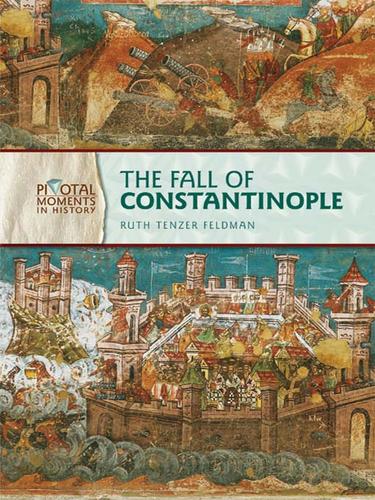
The Fall of Constantinople
0
0
As an Amazon Associate and affiliate partner, Menrva Books earns from qualifying purchases. Learn more
Author Description
How did the loss of one city change the history of Europe? In the Middle Ages, Constantinople’s perfect geographic location—positioned along a land trade route between Europe and Asia as well as on a strategic seaway from the Black Sea to the Mediterranean— made the city extremely desirous, and as a result, prone to attack. Under the control of the Roman and Byzantine Empires, Constantinople became known as "the Eye of the World," a center of government, trade, art, religion, and learning, and was even more desirous. Rulers built three sets of walls to protect Constantinople from attacks by Asiatic tribes. But the city’s fall to the Turkish Ottomans in 1453 marked the official end of the Byzantine Empire—and the end of the Middle Ages. Learn how the fall of Constantinople became one of history’s most pivotal moments.
Menrva's Summary
THE THESIS
The fall of Constantinople in 1453 marked a pivotal turning point in European and world history. This book explores how the city's strategic location and its status as a center of culture and power under the Byzantine Empire made it a constant target. It details the eventual conquest by the Turkish Ottomans, which signaled the end of the Byzantine Empire and the Middle Ages, fundamentally altering the geopolitical landscape.
THE SCOPE MAP
- What You Will Find:
- The strategic importance of Constantinople's geography and its role as a trade hub.
- The history of Constantinople as the capital of the Byzantine Empire, known as "the Eye of the World."
- The defensive measures, including the construction of three sets of walls, employed to protect the city.
- The conquest of Constantinople by the Ottoman Turks in 1453.
- The historical significance of the city's fall as the end of the Byzantine Empire and the Middle Ages.
THE AUTHORITY PERSPECTIVE
The book examines the historical context and consequences of the fall of Constantinople, a significant event that concluded the Byzantine Empire and the Middle Ages. It highlights the city's strategic importance and its cultural significance. The narrative focuses on the military and political factors leading to the Ottoman conquest and its impact on subsequent European history.
Page Count:
160
Publication Date:
2008-01-01
ISBN-10:
0761340262
ISBN-13:
9780761340263
Fiction
Non-Fiction
History
Siege Warfare
Ottoman Empire
Military History
Community Tags
Similar Books