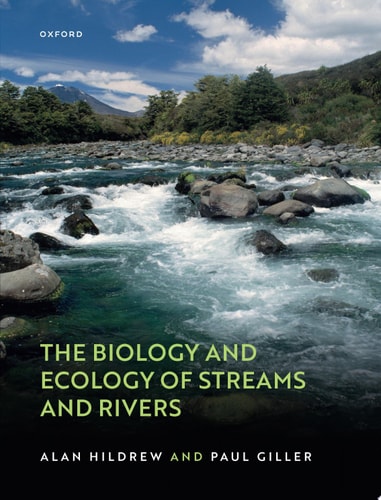
The Biology and Ecology of Streams and Rivers
0
0
As an Amazon Associate and affiliate partner, Menrva Books earns from qualifying purchases. Learn more
Author Description
The challenges that the world's running water systems now face have never been more numerous or acute; at the same time, these complex habitats remain absolutely crucial to human wellbeing and future survival. If rivers can ever be anything like sustainable, ecology needs to take its place as an equal among the physical sciences such as hydrology and geomorphology. A real understanding of the natural history and ecology of running waters must now be brought even more prominently into river management. The primary purpose of this textbook is to provide the up-to-date overview that students and practitioners will require to achieve this aim.The book's unifying focus is on rivers and streams as ecosystems in which the particular identity of organisms is not the main emphasis but rather the processes in which they are involved - specifically energy flow and the cycling of materials. It builds on the physicochemical foundations of the habitat templet and explores the diversity and adaptations of the biota, progressing from the population and community ecology of organisms and linking them to ecosystem processes and services in the wider biosphere via the complexities of species interactions and food webs. These include water quality and patterns of river discharge, as well as aesthetics, waste disposal, and environmental health. While the book is not primarily focused on application per se, each chapter addresses how humans affect rivers and, in turn, are affected by them. A final, future-oriented chapter identifies key strategic areas and sets a roadmap for integrating knowledge of natural history and ecology into policy and management.The Biology and Ecology of Streams and Rivers is an accessible text suitable for both senior undergraduate and graduate students taking courses in both lotic and general ecology as well as more established researchers, practitioners, managers, and conservationists requiring a concise and contemporary overview of running waters.
Menrva's Summary
THE THESIS
This text investigates how the integration of ecological principles into river management can address the acute challenges facing global running water systems. Authors Alan Hildrew and Paul S. Giller utilize their expertise in lotic ecology to argue that rivers must be understood as complex ecosystems where biological processes, such as energy flow and material cycling, are as critical as physical factors like hydrology. The book provides a structured framework for students and practitioners to bridge the gap between natural history and sustainable environmental policy.
THE SCOPE MAP
What You Will Find
- Physicochemical foundations of the habitat templet and river discharge patterns.
- Analysis of organismal diversity, adaptations, and complex species interactions within food webs.
- Examination of ecosystem processes, including energy flow and material cycling.
- Strategic roadmaps for integrating ecological knowledge into future river management and conservation policy.
THE AUTHORITY PERSPECTIVE
Experts and academics recognize this work as a foundational, contemporary overview of lotic ecology suitable for advanced students and professionals. Readers frequently note the clarity with which the authors synthesize complex biological processes with practical management applications.
Page Count:
480
Publication Date:
2023-08-30
Publisher:
Oxford University Press
ISBN-10:
019851610X
ISBN-13:
9780198516101
Science
Nature
Limnology
Hydrology
Biology
Natural Resources
Ecology
Community Tags
Similar Books