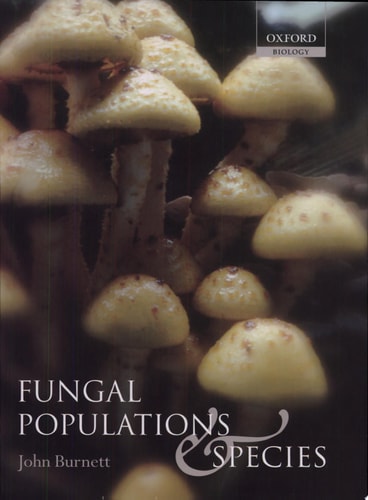
Fungal Populations and Species (Life Science)
0
0
As an Amazon Associate and affiliate partner, Menrva Books earns from qualifying purchases. Learn more
Author Description
The population genetics and speciation of fungi is a rapidly developing field, heavily dependent upon the use of molecular markers. No basic text exists which describes the methods employed or the findings obtained from such investigations. This book is intended to provide such an account. It describes the methodologies employed and, for the benefit of the non-mycological reader, a brief introduction to basic fungal biology. Recent findingsrelating to processes in fungal populations - mutation, migration, recombination, heterokaryosis, hybridization, polyploidy, and the operation of selective forces are combined with traditional fungal biology. Finally the taxonomic problems raised by fungal species are discussed, together with the processes of speciation.
Menrva's Summary
THE THESIS
This text investigates the population genetics and speciation mechanisms of fungi, addressing the lack of a foundational resource for researchers in this rapidly evolving field. Author John Burnett synthesizes traditional fungal biology with modern molecular marker techniques to provide a comprehensive framework for understanding how fungal populations operate and diverge. By bridging the gap between historical biological observations and contemporary genetic data, the book establishes a clear methodology for studying fungal evolution.
THE SCOPE MAP
What You Will Find
- Methodologies for utilizing molecular markers in fungal research
- An introduction to basic fungal biology for non-specialists
- Analysis of evolutionary processes including mutation, migration, recombination, and polyploidy
- Discussion of taxonomic challenges and the mechanisms of speciation in fungi
THE AUTHORITY PERSPECTIVE
Experts recognize this work as a foundational text that successfully bridges the gap between traditional mycology and modern genetic analysis. Readers frequently note the clarity with which the author explains complex evolutionary processes for those entering the field of fungal genetics.
Page Count:
368
Publication Date:
2003-03-13
Publisher:
Oxford University Press
ISBN-10:
0198515537
ISBN-13:
9780198515531
Science
Fungi genetics
Evolutionary Biology
Biology
Mycology
Genetics
Community Tags
Similar Books