Neuroconstructivism: Perspectives and Prospects
0
0
As an Amazon Associate and affiliate partner, Menrva Books earns from qualifying purchases. Learn more
Author Description
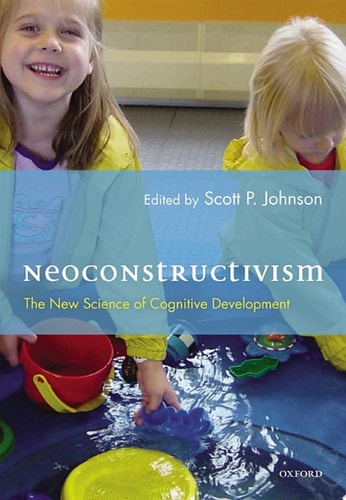
What are the processes, from conception to adulthood, that enable a single cell to grow into a sentient adult? They are so complex that any attempt to understand development necessitates a multi-disciplinary approach, integrating data from cognitive studies, computational modeling, and neuroimagingan approach until now seldom taken when considering child development. Neuroconstructivism is a major two-volume work that seeks to redress this balance, presenting an integrative new framework for considering development. In Volume One, the authors review up-to-date findings from neurobiology, brain imaging, child development, as well computer and robotic modeling to consider why children's thinking develops the way it does, and propose a new synthesis of development that is based on five key principles found to operate at many different levels of description. Their Neuroconstructivist framework also shows how developmental disorders, such as dyslexia, can arise from typical developmental processes operating under atypical constraints. Of central importance to Neuroconstructivism is the idea that computer and robotic models are vital tools for investigating the processes and mechanisms involved in learning and development. Volume Two illustrates the principles of Neuroconstructivist development through contributions from nine different labs across the world. This volume complements Volume One by providing concrete examples of how the Neuroconstructivist principles can be grounded in a diverse range of domains, and thereby shape the research agenda in each.
Menrva's Summary
THE THESIS
How can the complex processes of human development be understood through an integrative, multi-disciplinary framework that bridges biology, cognition, and computational modeling? The authors, experts in developmental cognitive neuroscience, argue that a unified approach is required to map the transition from a single cell to a sentient adult. By synthesizing data from neurobiology, brain imaging, and robotics, they propose a Neuroconstructivist framework that explains both typical development and the emergence of developmental disorders under atypical constraints.
THE SCOPE MAP
What You Will Find
- Empirical applications of Neuroconstructivist principles across nine international research laboratories.
- Integration of computational and robotic modeling as primary tools for investigating learning mechanisms.
- Analysis of how developmental disorders like dyslexia emerge from standard developmental processes.
- A multi-disciplinary synthesis combining cognitive studies, neuroimaging, and computer science.
THE AUTHORITY PERSPECTIVE
Experts recognize this two-volume work as a foundational text for researchers seeking to bridge the gap between biological development and cognitive function. Readers frequently note the academic density of the prose, which is intended for advanced students and professionals in the field of neuroscience.
Page Count:
288
Publication Date:
2007-03-15
Publisher:
Oxford University Press
ISBN-10:
0198529929
ISBN-13:
9780198529927
Psychology
Science
Neuroscience
Developmental Psychology
Community Tags
Similar Books