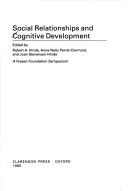
Social Relationships and Cognitive Development: A Fyssen Foundation Symposium
0
0
As an Amazon Associate and affiliate partner, Menrva Books earns from qualifying purchases. Learn more
Author Description
Most children grow up in a nuclear or extended family, interacting first with one or two parents, and then with siblings, with relations, and with friends, networks which constitute the most important part of the child's environment. This volume considers the interplay between an individual's social interactions and his cognitive development, tracing the effects of this interplay on children of a variety of ages, and discussing the role of conflict, the neo-Piagetian and Vygotskyan approaches, and therapies to increase social competence. The book demonstrates that cognitive development is closely related to other aspects of the individual, including emotions.
Menrva's Summary
THE THESIS
This volume investigates the fundamental question of how social interactions and interpersonal relationships serve as primary catalysts for cognitive development in children. The authors, including prominent researchers Anne-Nelly Perret-Clermont and Robert A. Hinde, synthesize findings from a Fyssen Foundation symposium to examine the nexus between social environment and intellectual growth. By integrating neo-Piagetian and Vygotskyan frameworks, the text argues that cognitive maturation cannot be isolated from the emotional and social contexts in which a child resides.
THE SCOPE MAP
What You Will Find
- Analysis of the interplay between social networks and individual cognitive progression
- Application of neo-Piagetian and Vygotskyan theoretical frameworks
- Examination of the role of conflict in fostering social and cognitive competence
- Discussion of therapeutic interventions designed to enhance social interaction skills
- Longitudinal perspectives on child development across various age groups
THE AUTHORITY PERSPECTIVE
Experts recognize this text as a foundational resource for understanding the social dimensions of developmental psychology. Researchers frequently cite the volume for its rigorous synthesis of theoretical approaches and its clear articulation of the link between emotional health and cognitive development.
Page Count:
300
Publication Date:
1986-02-20
Publisher:
Oxford University Press
ISBN-10:
0198521677
ISBN-13:
9780198521679
Psychology
Sociology
Education
Cognition
Community Tags
Similar Books