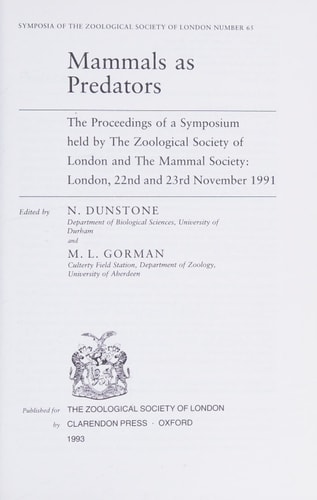
Mammals as Predators
0
0
As an Amazon Associate and affiliate partner, Menrva Books earns from qualifying purchases. Learn more
Author Description
This volume explores three major areas of research on predatory mammals: physiological adaptations, predatory tactics, and management dilemmas resulting from predation that upsets ecological balance or human activities. Contributors discuss the cases of many different types of animals, from otters and badgers to lions and leopards. The big cats, for example, are included in the context of studies of cattle mortality in Kenya and Venezuela and other countries. Other chapters discuss problems caused by fish-eating mammals near coastal Scotland, disease carrying birds, urban foxes, and many equally insightful cases. The book will interest all ecologists, zoologists, and conservationists concerned with issues relating to the predatory habits of wildlife around the world.
Menrva's Summary
THE THESIS
This volume investigates the complex biological, behavioral, and ecological dimensions of mammalian predation and the subsequent management challenges these interactions pose to human interests and environmental stability. The authors, M. L. Gorman and N. Dunstone, compile research from various experts to examine how physiological adaptations and specific hunting tactics allow mammals to thrive in diverse ecosystems. The text provides a framework for understanding the intersection of wildlife behavior and human-managed landscapes, focusing on the tension between natural predatory instincts and the requirements of conservation and agriculture.
THE SCOPE MAP
What You Will Find
- Physiological adaptations facilitating predatory behavior in diverse mammalian species
- Analysis of predatory tactics across various habitats and environmental conditions
- Case studies involving large carnivores such as lions and leopards in Kenya and Venezuela
- Management strategies for mitigating conflicts between fish-eating mammals and coastal industries
- Examination of urban wildlife dynamics, specifically regarding fox populations
THE AUTHORITY PERSPECTIVE
Experts and academics recognize this volume as a specialized resource for those studying the intersection of wildlife management and behavioral ecology. Readers frequently note the academic density of the prose, which serves as a foundational reference for zoologists and conservationists.
Page Count:
512
Publication Date:
1993-07-22
Publisher:
Clarendon Press
ISBN-10:
0198540671
ISBN-13:
9780198540670
Nature
Science
Conservation
Mammals
Zoology
Ecology
Biology
Community Tags
Similar Books