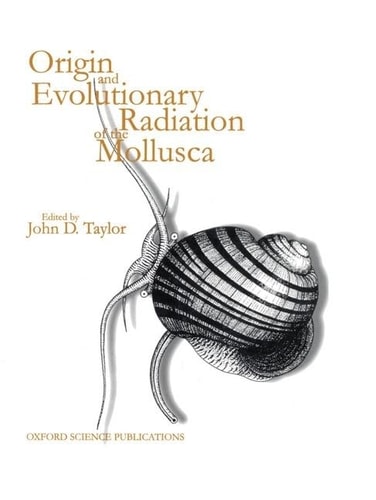
Origin and Evolutionary Radiation of the Mollusca
0
0
As an Amazon Associate and affiliate partner, Menrva Books earns from qualifying purchases. Learn more
Author Description
The Mollusca are a large, diverse, and economically important group that ranges from slugs and snails through clams and oysters to octopus, squid, and cuttlefish. They are evolutionarily ancient and better known than most invertebrate groups because of their calcareous skeletons, which has led to their excellent preservation as fossils. This is a state-of-the-art summary of research into Molluscs and their evolution, including recent developments in phylogenetic analysis and molecular techniques. Since the last book on this topic was published in 1985, the vast amount of updated information found here should be on the bookshelf of every zoologist, evolutionary biologist, and taxonomist.
Menrva's Summary
THE THESIS
This volume investigates the evolutionary origins and radiation of the Mollusca, addressing how this diverse phylum developed its complex biological and morphological traits over geological time. John D. Taylor, a recognized expert in malacology, synthesizes decades of research to provide a comprehensive update on the group's phylogeny. The text integrates traditional fossil record analysis with modern molecular techniques to clarify the evolutionary relationships between disparate groups such as gastropods, bivalves, and cephalopods. By bridging the gap between historical paleontology and contemporary genomic studies, the author establishes a current framework for understanding molluscan diversification.
THE SCOPE MAP
What You Will Find
- Comprehensive analysis of molluscan phylogeny and evolutionary radiation
- Integration of fossil record data with modern molecular sequencing techniques
- Detailed examination of morphological diversity across major classes including Gastropoda, Bivalvia, and Cephalopoda
- Updated taxonomic classifications reflecting recent scientific advancements
THE AUTHORITY PERSPECTIVE
Experts identify this work as a critical update to the field, filling a significant knowledge gap that has persisted since the mid-1980s. The text is noted for its academic rigor and is considered a foundational reference for professional zoologists and evolutionary biologists.
Page Count:
408
Publication Date:
1996-02-01
Publisher:
Oxford University Press
ISBN-10:
0198549806
ISBN-13:
9780198549802
Science
Taxonomy
Evolutionary Biology
Biology
Zoology
Mollusks
Paleontology
Community Tags
Similar Books