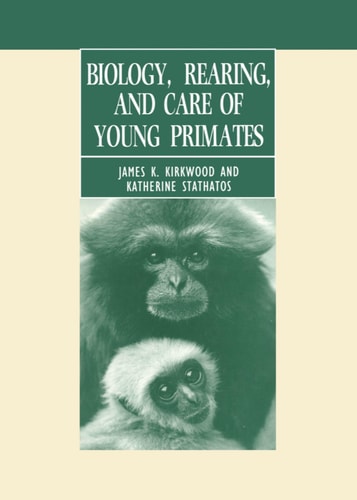
Biology, Rearing, and Care of Young Primates
0
0
As an Amazon Associate and affiliate partner, Menrva Books earns from qualifying purchases. Learn more
Author Description
The propagation of wild animals in captivity is playing an increasingly important role in the conservation of species. This is particularly true of primates, many of which are threatened or endangered in their natural habitat. Unfortunately, primate mortality during the neonatal period is often high in captivity. However significant improvements in infant survival can be made with a better knowledge of neonatal biology and rearing procedures. The aim of this book is to provide a reference text on the normal growth of 18 primate species commonly held in captivity for propagation or research, and on the housing, feeding, management, and preventive medicine techniques that enable this normal growth. Up-to-date information, scattered widely through the scientific literature, is here gathered together and presented in an easily accessible form for those involved in rearing primates in captivity.
Menrva's Summary
THE THESIS
This text investigates the critical biological and management factors necessary to reduce neonatal mortality rates among captive primate populations. The authors, James Kirkwood Jr. and Katherine Stathatos, synthesize fragmented scientific data into a cohesive reference manual. By focusing on the intersection of neonatal development and husbandry, the work provides a framework for improving survival outcomes in conservation and research settings.
THE SCOPE MAP
What You Will Find
- Detailed growth parameters for 18 distinct primate species commonly held in captivity.
- Standardized protocols for housing, feeding, and environmental management.
- Clinical guidelines for preventive medicine and neonatal health monitoring.
- Evidence-based rearing procedures derived from current scientific literature.
THE AUTHORITY PERSPECTIVE
Experts recognize this work as a foundational reference for zoo professionals and researchers involved in primate propagation. Readers frequently note the technical density of the data, which serves as a practical manual for those tasked with the daily care of endangered species.
Page Count:
168
Publication Date:
1992-08-06
Publisher:
Oxford University Press
ISBN-10:
0198547331
ISBN-13:
9780198547334
Science
Primates
Veterinary Medicine
Biology
Conservation
Zoology
Community Tags
Similar Books