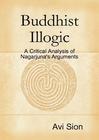
Buddhist Illogic
0
0
As an Amazon Associate and affiliate partner, Menrva Books earns from qualifying purchases. Learn more
Author Description
The 2nd Century CE Indian philosopher Nagarjuna founded the Madhyamaka (Middle Way) school of Mahayana Buddhism, which strongly influenced Chinese, Korean and Japanese Buddhism, as well as Tibetan Buddhism. His writings include a series of arguments purporting to show the illogic of logic, the absurdity of reason. He considers this the way to verbalize and justify the Buddhist doctrine of “emptiness” (Shunyata). The present essay demonstrates the many sophistries involved in Nagarjuna’s arguments.
Menrva's Summary
THE THESIS
This essay critically examines the philosophical arguments of Nagarjuna, the founder of the Madhyamaka school of Mahayana Buddhism. The author, Avi Sion, demonstrates numerous sophistries within Nagarjuna's purported refutations of logic and reason, which were intended to support the Buddhist doctrine of emptiness (Shunyata). The work focuses on deconstructing the logical fallacies present in Nagarjuna's philosophical approach, offering a counter-argument to his Middle Way philosophy.
THE SCOPE MAP
- Analysis of Nagarjuna's Madhyamaka (Middle Way) school of Mahayana Buddhism.
- Demonstration of sophistries in Nagarjuna's arguments against logic and reason.
- Explanation of Nagarjuna's use of illogic to justify the doctrine of emptiness (Shunyata).
- Critique of the philosophical underpinnings of Nagarjuna's approach.
- Focus on the 2nd Century CE Indian philosophical context.
THE AUTHORITY PERSPECTIVE
This work offers a direct critique of Nagarjuna's philosophical system, focusing on the logical inconsistencies within his arguments for Shunyata. It aims to deconstruct the sophistries employed by Nagarjuna, providing a counter-analysis for readers interested in the intersection of Buddhist philosophy and Western logic. The book's approach suggests a dense, analytical text for those familiar with Buddhist thought and logical reasoning.
Page Count:
216
Publication Date:
2002-01-01
ISBN-10:
2970009145
ISBN-13:
9782970009146
Non-Fiction
Religion
Philosophy
Logic
Buddhism
Community Tags
Similar Books