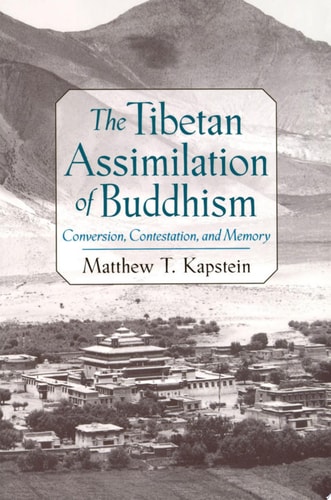
The Tibetan Assimilation of Buddhism: Conversion, Contestation, and Memory
0
0
As an Amazon Associate and affiliate partner, Menrva Books earns from qualifying purchases. Learn more
Author Description
This book explores the Buddhist role in the formation of Tibetan religious thought and identity. In three major sections, the author examines Tibet's eighth-century conversion, sources of dispute within the Tibetan Buddhist tradition, and the continuing revelation of the teaching in both doctrine and myth.
Menrva's Summary
THE THESIS
How did the introduction and subsequent assimilation of Buddhism fundamentally reshape Tibetan religious identity and cultural memory? Matthew T. Kapstein, a scholar of Tibetan and Buddhist studies, utilizes historical records, doctrinal texts, and mythic narratives to analyze the integration of Indian Buddhist traditions into the Tibetan landscape. The book argues that this process was not a passive reception but an active, often contentious, negotiation that defined the trajectory of Tibetan civilization.
THE SCOPE MAP
What You Will Find
- Analysis of the eighth-century conversion of Tibet to Buddhism
- Examination of internal doctrinal disputes and sectarian debates
- Exploration of the role of myth and revelation in sustaining religious authority
- Historical context regarding the transmission of Indian texts
Scope Limits
- Does not provide a comprehensive political history of Tibet
- Focuses primarily on religious and intellectual history rather than sociological data
THE AUTHORITY PERSPECTIVE
Scholars frequently cite this work as a foundational text for understanding the complexities of Tibetan religious history. Readers often note the academic density of the prose, which requires a baseline familiarity with Buddhist terminology to fully appreciate the author's arguments.
Page Count:
337
Publication Date:
2002-01-01
Publisher:
Oxford University Press
ISBN-10:
0190288205
ISBN-13:
9780190288204
Philosophy
Religion
History
Buddhism
Tibet China
Cultural History
Community Tags
Similar Books