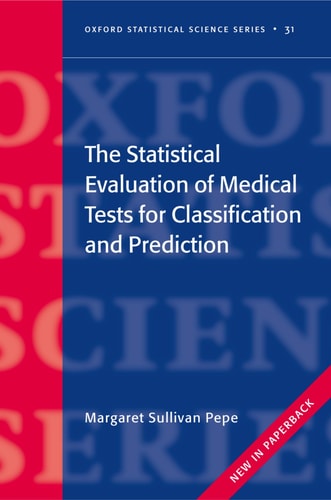
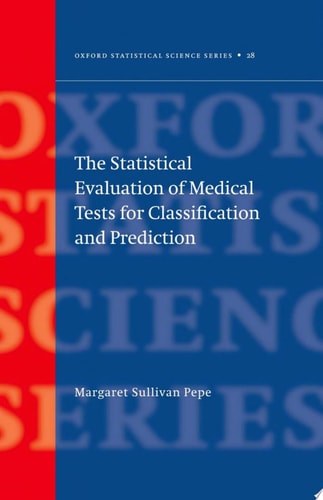
The Statistical Evaluation of Medical Tests for Classification and Prediction
0
0
As an Amazon Associate and affiliate partner, Menrva Books earns from qualifying purchases. Learn more
Author Description
This book describes statistical concepts and techniques for evaluating medical diagnostic tests and biomarkers for detecting disease. More generally, the techniques pertain to the statistical classification problem for predicting a dichotomous outcome. Measures for quantifying test accuracy are described including sensitivity, specificity, predictive values, diagnostic likelihood ratios and the Receiver Operating Characteristic Curve that is commonly used for continuous and ordinal valued tests. Statistical procedures are presented for estimating and comparing them. Regression frameworks for assessing factors that influence test accuracy and for comparing tests while adjusting for such factors are presented. This book presents many worked examples of real data and should be of interest to practicing statisticians or quantitative researchers involved in the development of tests for classification or prediction in medicine.
Menrva's Summary
THE THESIS
This book investigates the statistical methodologies required to evaluate the accuracy and predictive power of medical diagnostic tests and biomarkers. Margaret Sullivan Pepe, a recognized expert in biostatistics, provides a comprehensive framework for addressing the classification problem where the goal is to predict a dichotomous outcome. The text synthesizes theoretical concepts with practical applications, offering a rigorous approach to quantifying test performance in clinical settings.
THE SCOPE MAP
What You Will Find
- Quantitative measures including sensitivity, specificity, predictive values, and diagnostic likelihood ratios.
- Detailed analysis of the Receiver Operating Characteristic (ROC) Curve for continuous and ordinal data.
- Regression frameworks for assessing factors that influence test accuracy and for comparing multiple diagnostic tests.
- Practical application through worked examples using real-world medical datasets.
THE AUTHORITY PERSPECTIVE
Experts in the field of biostatistics recognize this work as a foundational text for researchers and practitioners involved in medical test development. Readers frequently note the technical density of the prose, which is tailored for those with a strong background in quantitative methods.
Page Count:
318
Publication Date:
2004-12-16
Publisher:
Oxford University Press
ISBN-10:
0198565828
ISBN-13:
9780198565826
Science
Medical
Reference
Mathematics
Statistics
Community Tags
Other Editions(4)


Similar Books