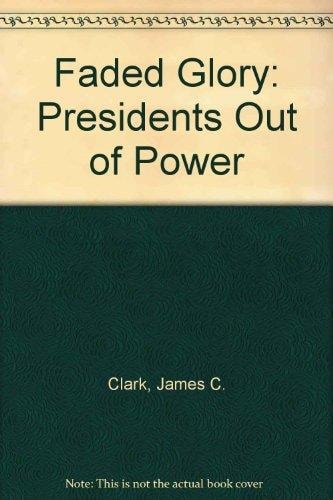
Faded Glory Presidents Out of Power
0
0
As an Amazon Associate and affiliate partner, Menrva Books earns from qualifying purchases. Learn more
Author Description
James Clark delves deeply into the archives of our nation's presidential history to reveal that, for many former presidents, life after the White House was far from a gratifying experience and often brought poverty, despair, and the hope that somehow they might return to power. Focusing on individual presidential lives, Clark relates how Thomas Jefferson slipped into poverty and spent his final days trying to sell his beloved Monticello; how Franklin Pierce succumbed to alcoholism; how James Buchanan was suspected of being a Confederate spy, and more. Clark reveals uncharacteristic behavioral patterns of former presidents who, filled with frustration and resentment, leveled undue criticism at their successors. He also observes that those men who wished to remain in the White House, often left with great bitterness, unable to deal with the loss of power and prestige.
Menrva's Summary
THE THESIS
This book investigates the often difficult and frequently overlooked transition of United States presidents from the height of executive power to the realities of private life. Author James C. Clark, a historian specializing in American political history, utilizes archival research and biographical records to examine the psychological and financial struggles faced by former commanders-in-chief. The text argues that the loss of prestige and the inability to relinquish influence often led to personal decline, bitterness, and public controversy for many former leaders.
THE SCOPE MAP
What You Will Find
- Biographical accounts of post-presidency lives for figures including Thomas Jefferson, Franklin Pierce, and James Buchanan.
- Analysis of financial instability and social isolation among former presidents.
- Examination of the political friction between former presidents and their successors.
Scope Limits
- The book does not provide a comprehensive biography of every president, focusing instead on those with notable post-presidency struggles.
- It does not offer a modern policy analysis of the transition of power, remaining strictly historical in its focus.
THE AUTHORITY PERSPECTIVE
Historians and readers frequently note the accessible narrative style Clark employs to humanize figures often relegated to static historical roles. Experts highlight this as a useful study for understanding the psychological toll of the presidency and the historical evolution of the office's post-tenure expectations.
Page Count:
175
Publication Date:
1985-01-01
Publisher:
Praeger Publishers
ISBN-10:
0030025729
ISBN-13:
9780030025723
Biography
Politics
History
Politics & Government
United States
Presidential History
Community Tags
Similar Books