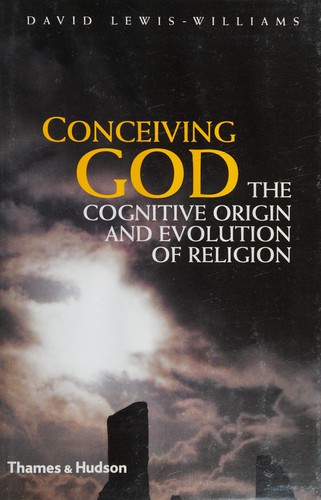
Conceiving God
0
0
As an Amazon Associate and affiliate partner, Menrva Books earns from qualifying purchases. Learn more
Author Description
This book is a controversial exploration of the origin of religion in the neurology of the human brain. The author first describes how science developed within the cocoon of religion and then shows how the natural functioning of the human brain creates experiences that can lead to belief in a supernatural realm, beings, and interventions. Once people have these experiences, they formulate beliefs about them, and thus creeds are born. Forty thousand years ago, people were leaving traces in the archaeological record of activities that we can label religious, and the author discusses in detail the evidence preserved in the Volp Caves in France. He also shows that mental imagery produced by the functioning of the human brain can be detected in widely separated religious communities such as Hildegard of Bingen's in medieval Europe or the San hunters of southern Africa.
Menrva's Summary
THE THESIS
This book controversially explores the neurological origins of religion, positing that the human brain's natural functioning generates experiences interpreted as supernatural. The author, J. David Lewis-Williams, examines the historical relationship between science and religion, arguing that innate brain processes lead to beliefs in supernatural realms and beings. He details how these experiences, once formed into creeds, are evidenced in the archaeological record, citing the Volp Caves in France from 40,000 years ago as a key example. Lewis-Williams further demonstrates the universality of these brain-generated mental imagery across disparate religious communities, including medieval Europe and the San hunters of southern Africa.
THE SCOPE MAP
- What You Will Find:
- An examination of the historical development of science within religious frameworks.
- An analysis of how human brain neurology produces experiences interpreted as supernatural.
- Detailed evidence from the Volp Caves in France, dating back 40,000 years.
- Comparative studies of mental imagery in religious communities such as Hildegard of Bingen and the San hunters.
THE AUTHORITY PERSPECTIVE
The book presents a controversial thesis on the neurological origins of religion, suggesting that the human brain's natural functioning is the source of supernatural experiences and subsequent belief systems. The author supports this by drawing on archaeological evidence, such as that found in the Volp Caves, and by comparing mental imagery across diverse religious communities. The work aims to explain the genesis of creeds through the biological and psychological processes of early humans. Its arguments are likely to provoke discussion among scholars of religion, anthropology, and neuroscience.
Page Count:
320
Publication Date:
2010-01-01
ISBN-10:
050005164X
ISBN-13:
9780500051641
Science
Philosophy
Religion
History
Psychology
Non-Fiction
Archaeology
History of religion
Anthropology
Neuroscience
Community Tags
Similar Books














