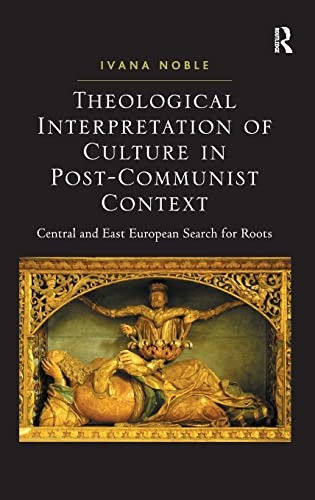
Theological Interpretation of Culture in Post-Communist Context
0
0
As an Amazon Associate and affiliate partner, Menrva Books earns from qualifying purchases. Learn more
Author Description
Ivana Noble has written a sensitive and powerful book, courageous in its honest pathos for bumanity and inspiring with its bumble confidence. In these pages the soul of Central-Eastern Europe comes to life as this talented theologian graces us with knowledge of how religious symbols and meaning cultivate the human search for meaning under the ambivalent surfaces of life, in once aggressive but now post-secular societies. Noble offers us in the West an encounter with the Other that cannot but give much food for thought about religion in our own increasingly post-institutional religious situations. Original not only in content but also methodology, her text promises mumerous insights for political theology, liturgical studies, theological aesthetics, indeed, for all seeking to construct theologies at once fundamental and practical in this postmodern age. Bruce T. Morrill, S.J. Thcology Department, Boston College, USA -- Twenty years after the fall of Communism in Central and East Europe is an occasion to reevaluate the cultural and theological contribution from that region to the secularization---post-secularization debate. -- Czech theologian Ivana Noble develops a Trinitarian theology through a close dialogue with literature, music and film, which formed not only alternatives to totalitarian ideologies, but also followed the loss and reappearance of belief in God. Noble explains that, by listening to the artists, the churches and theologians can deal with questions about the nature of the world, memory and ultimate fulfilment in a more nuanced way. Then, as partakers in the search undertaken by their secular and post-secular contemporaries, theologians can penetrate a new depth of meaning, sending out shoots from the stump of Christian symbolism. Drawing on the rich cultures of Central and East Europe and both western and eastern theological traditions, this book presents a theological reading of contemporary culture which is important not just for post-Communist countries but for all who are engaged in the debate on the boundaries between theology, politics and arts. --Book Jacket.
Menrva's Summary
THE THESIS
This book investigates how theological interpretation can engage with and illuminate the complexities of culture in post-communist societies. Ivana Noble, a Czech theologian, explores the re-emergence of religious symbols and meaning in Central and Eastern Europe following the fall of Communism. By engaging with literature, music, and film, the book demonstrates how artists and theologians can address fundamental questions about existence, memory, and fulfillment in societies transitioning from totalitarianism to a post-secular landscape. Noble's work offers a nuanced theological reading of contemporary culture, drawing on both Western and Eastern traditions to foster a deeper understanding of faith in the modern age.
THE SCOPE MAP
- What You Will Find:
- A Trinitarian theological framework applied to cultural analysis.
- Dialogue with literature, music, and film from Central and Eastern Europe.
- Exploration of the loss and reappearance of belief in post-communist contexts.
- Analysis of secularization and post-secularization debates.
- Insights for political theology, liturgical studies, and theological aesthetics.
- A theological reading of contemporary culture informed by Western and Eastern traditions.
THE AUTHORITY PERSPECTIVE
The book is praised for its sensitive and powerful approach, offering a courageous and humble perspective on humanity. Bruce T. Morrill, S.J. of Boston College highlights its originality in both content and methodology, suggesting it provides significant insights for various theological fields and for understanding religion in post-institutional contexts. The work is noted for its ability to bring the soul of Central-Eastern Europe to life, exploring how religious symbols cultivate the human search for meaning in societies that have moved from aggressive secularism to a post-secular state. It is considered a valuable contribution to the ongoing dialogue on secularization and its transformations.
Page Count:
230
Publication Date:
2010-01-01
ISBN-10:
1409400077
ISBN-13:
9781409400073
Philosophy
Non-Fiction
Art
Religion
Political theology
Theology
Theological Aesthetics
Community Tags
Similar Books
Reader Comments
Share Your Thoughts
No comments yet. Be the first to share your thoughts!