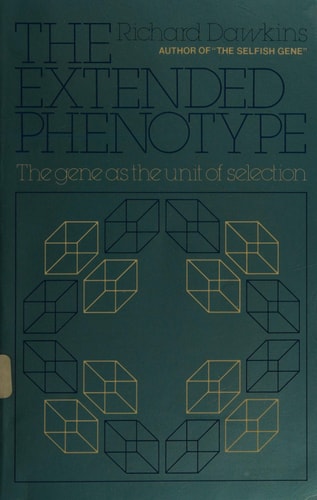
The Extended Phenotype: The Gene as the Unit of Selection
0
0
As an Amazon Associate and affiliate partner, Menrva Books earns from qualifying purchases. Learn more
Author Description
People commonly view evolution as a process of competition between individuals--known as "survival of the fittest"--with the individual representing the "unit of selection." Richard Dawkins offers a controversial reinterpretation of that idea in The Extended Phenotype, now being reissued to coincide with the publication of the second edition of his highly-acclaimed The Selfish Gene. He proposes that we look at evolution as a battle between genes instead of between whole organisms. We can then view changes in phenotypes--the end products of genes, like eye color or leaf shape, which are usually considered to increase the fitness of an individual--as serving the evolutionary interests of genes.Dawkins makes a convincing case that considering one's body, personality, and environment as a field of combat in a kind of "arms race" between genes fighting to express themselves on a strand of DNA can clarify and extend the idea of survival of the fittest. This influential and controversial book illuminates the complex world of genetics in an engaging, lively manner.
Menrva's Summary
THE THESIS
The core question investigated is whether the gene, rather than the individual organism, serves as the primary unit of selection in the evolutionary process. Richard Dawkins, a prominent evolutionary biologist, utilizes his expertise in ethology and genetics to challenge the traditional focus on individual fitness. He presents a theoretical framework that redefines the phenotype to include the effects of genes on the environment, arguing that these effects are adaptations that benefit the genes themselves rather than the organism.
THE SCOPE MAP
What You Will Find
- Theoretical analysis of the gene-centered view of evolution
- Reinterpretation of phenotypic expression beyond the physical body
- Discussion of the arms race between competing genetic interests
- Synthesis of evolutionary biology and behavioral ecology
THE AUTHORITY PERSPECTIVE
Experts recognize this work as a foundational text in evolutionary biology that significantly expanded the arguments introduced in The Selfish Gene. Readers frequently note the academic density of the prose, which requires a solid grasp of biological concepts to fully appreciate the author's complex arguments.
Page Count:
320
Publication Date:
1984-05-31
Publisher:
Oxford University Press
ISBN-10:
0198576099
ISBN-13:
9780198576099
Science
Non-Fiction
Natural selection
Biology
Evolutionary Biology
Genetics
Community Tags
Similar Books