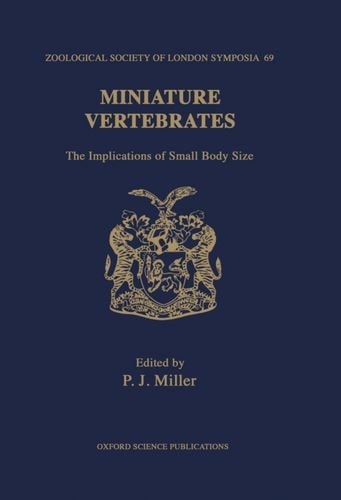
Miniature Vertebrates: The Implications of Small Body Size
0
0
As an Amazon Associate and affiliate partner, Menrva Books earns from qualifying purchases. Learn more
Author Description
This book deals with a wide range of topics relating to the fascinating biology of tiny vertebrates, concentrating on the smallest representatives of the major vertebrate groups, from neon tetras to minute shrews. The first section deals with aspects of vertebrate structure and function in relation to diminishing body size. The second part of the book takes up an ecological perspective, with chapters on small fish, amphibians, hummingbirds, small terrestrial mammals, and on dwarfing in elephants and deer. The volume concludes with a chapter on the psychology of human interest in small vertebrates.
Menrva's Summary
THE THESIS
This volume investigates the biological, structural, and ecological implications of extreme miniaturization within vertebrate species. Editor Peter J. Miller compiles research from the Zoological Society of London to examine how diminishing body size influences physiological function and survival strategies. The text provides a comprehensive framework for understanding the constraints and adaptations required for the smallest representatives of major vertebrate groups.
THE SCOPE MAP
What You Will Find
- Comparative analysis of vertebrate structure and function relative to body size reduction.
- Ecological case studies covering fish, amphibians, hummingbirds, and small terrestrial mammals.
- Examination of evolutionary dwarfing processes in larger species such as elephants and deer.
- A concluding analysis regarding the psychological aspects of human fascination with miniature fauna.
THE AUTHORITY PERSPECTIVE
Experts recognize this volume as a specialized academic resource for zoologists and evolutionary biologists interested in scaling laws. Readers frequently note the technical density of the prose, which serves as a foundational reference for the study of vertebrate miniaturization.
Page Count:
352
Publication Date:
1996-09-12
Publisher:
Clarendon Press
ISBN-10:
0198577877
ISBN-13:
9780198577874
Science
Ecology
Zoology
Vertebrates
Biology
Community Tags
Similar Books