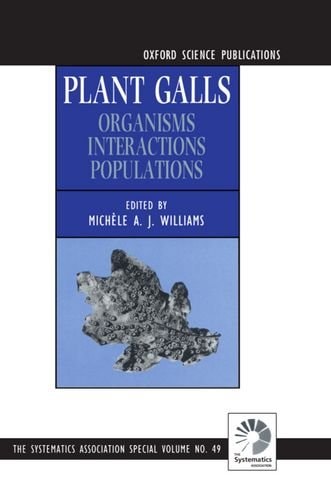
Plant Galls: Organisms, Interactions, Populations
0
0
As an Amazon Associate and affiliate partner, Menrva Books earns from qualifying purchases. Learn more
Author Description
Plant galls may be produced by a wide variety of organisms, from fungi to parasitic insects, on an equally wide variety of hosts. Their taxonomy is highly complex, as are the life cycles of the organisms associated with them. Yet, common as they are, plant galls are often poorly understood. This book brings together information from the diverse disciplines involved in the study of plant galls: ecology, evolution, molecular biology, physiology, and developmental biology. The work considers the latest issues, covering questions of classification, coevolution, ecology, physiology, and plant genetic engineering. As an up-to-date resource in an area of immense interest and debate, the book will enhance the quality of discussion surrounding these phenomena, across all disciplinary perspectives.
Menrva's Summary
THE THESIS
This volume investigates the complex biological mechanisms, ecological interactions, and evolutionary significance of plant galls across diverse host species. Michele A. J. Williams synthesizes research from ecology, molecular biology, and physiology to provide a comprehensive framework for understanding how various organisms induce gall formation. The text addresses the taxonomic challenges and developmental processes inherent in these plant-organism interactions, offering a unified perspective on a traditionally fragmented field of study.
THE SCOPE MAP
What You Will Find
- Taxonomic classification of gall-inducing organisms including fungi and insects
- Analysis of coevolutionary dynamics between hosts and parasites
- Examination of physiological and molecular developmental pathways
- Discussion of applications in plant genetic engineering
THE AUTHORITY PERSPECTIVE
Experts recognize this volume as a vital interdisciplinary resource for researchers navigating the complex intersection of botany and entomology. Readers frequently note the academic density of the prose, which serves as a foundational reference for those studying plant-parasite interactions.
Page Count:
504
Publication Date:
1994-11-17
Publisher:
Clarendon Press
ISBN-10:
0198577699
ISBN-13:
9780198577690
Science
Ecology
Biology
Galls Botany
Gall Insects
Botany
Evolutionary Biology
Entomology
Community Tags
Similar Books