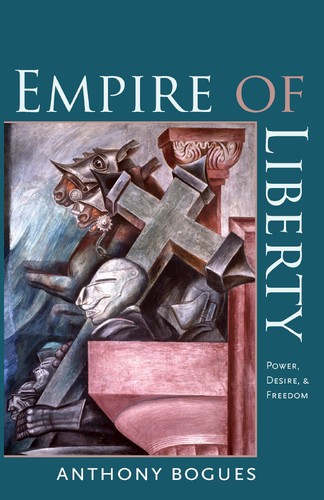
Empire of Liberty
0
0
As an Amazon Associate and affiliate partner, Menrva Books earns from qualifying purchases. Learn more
Author Description
In this thoughtful and timely consideration of the nature of American power and empire, Anthony Bogues argues that America's self-presentation as the bastion of liberty is an attempt to force upon the world a single universal truth, which has the objective of eradicating the radical imagination. Central to this project of American supremacy is the elaboration and construction of a language of power in which a form of self-government appears as the form of sovereignty. Grappling with issues of power, race, slavery, violence, and the nature of postcolonial criticism and critical theory, Bogues offers reconsiderations of the writings of W. E. B. DuBois and Frantz Fanon in order to break holes in this accepted structure of empire. At its heart this is a work of radical humanistic theory that seeks to glean from the postcolonial world and empire an alternative to its imperial form of freedom.
Menrva's Summary
THE THESIS
This book interrogates the paradoxical nature of American power, which presents itself as the ultimate bastion of liberty while simultaneously seeking to impose a singular, universal truth that stifles radical imagination. Anthony Bogues contends that this project of American supremacy is deeply intertwined with a specific language of power, where self-government is conflated with sovereignty. By examining the constructs of power, race, slavery, and violence, and drawing upon postcolonial criticism and critical theory, Bogues re-evaluates the works of W. E. B. Du Bois and Frantz Fanon to challenge established notions of empire. Ultimately, this is a work of radical humanistic theory aiming to uncover alternatives to imperial freedom by gleaning insights from the postcolonial world.
THE SCOPE MAP
- Analysis of American power and its presentation as a global force for liberty.
- Exploration of how American ideology seeks to eradicate the 'radical imagination'.
- Examination of the language of power that equates self-government with sovereignty.
- Engagement with themes of race, slavery, and violence within the context of empire.
- Reconsideration of the writings of W. E. B. Du Bois and Frantz Fanon.
- Application of postcolonial criticism and critical theory to understand American supremacy.
- Gleaning insights from the postcolonial world to propose alternatives to imperial forms of freedom.
THE AUTHORITY PERSPECTIVE
The book is regarded as a thoughtful and timely consideration of American power and empire. Bogues's argument that American self-presentation as a bastion of liberty serves to eradicate the radical imagination is central to its critical reception. The work is noted for its engagement with complex issues of power, race, slavery, and violence, drawing on postcolonial criticism and critical theory. By re-examining key thinkers like Du Bois and Fanon, the book aims to offer alternative perspectives on freedom beyond imperial structures.
Page Count:
0
Publication Date:
2010-01-01
ISBN-10:
1584659300
ISBN-13:
9781584659303
History
Politics
Non-Fiction
Philosophy
American Studies
Critical Theory
Community Tags
Similar Books