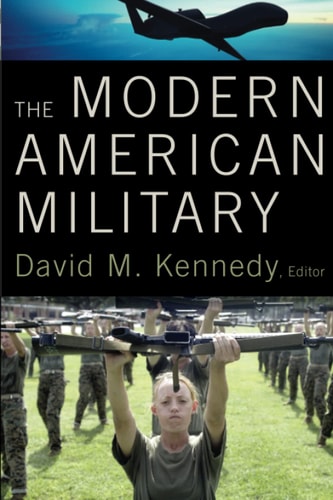
Modern American Military
0
0
As an Amazon Associate and affiliate partner, Menrva Books earns from qualifying purchases. Learn more
Author Description
The advent of the all-volunteer force and the evolving nature of modern warfare have transformed our military, changing it in serious if subtle ways that few Americans are aware of. Edited by Pulitzer Prize-winning historian David M. Kennedy, this stimulating volume brings together insights from a remarkable group of scholars, who shed important new light on the changes effecting today's armed forces.Beginning with a Foreword by former Secretary of Defense William J. Perry, the contributors take an historical approach as they explore the ever-changing strategic, political, and fiscal contexts in which the armed forces are trained and deployed, and the constantly shifting objectives that they are tasked to achieve in the post-9/11 environment. They also offer strong points of view. Lawrence Freedman, for instance, takes the leadership to task for uncritically embracing the high-tech Revolution in Military Affairs when "conventional" warfare seems increasingly unlikely. And eminent psychiatrist Jonathan Shay warns that the post-battle effects of what he terms "moral wounds" currently receive inadequate attention from the military and the medical profession. Perhaps most troubling, Karl Eikenberry raises the issue of the "political ownership" of the military in an era of all-volunteer service, citing the argument that, absent the political protest common to the draft era, government decision-makers felt free to carry out military operations in both Iraq and Afghanistan. Andrew Bacevich goes further, writing that "it's no longer our army; it hasn't been for years; it's theirs [the government's] and they intend to keep it."Looking at such issues as who serves and why, the impact of non-uniformed "contractors" in the war zone, and the growing role of women in combat, this volume brings together leading thinkers who illuminate the American military at the beginning of the twenty-first century.
Menrva's Summary
THE THESIS
This volume investigates the structural, political, and cultural transformations of the American military following the transition to an all-volunteer force and the onset of post-9/11 conflicts. Edited by Pulitzer Prize-winning historian David M. Kennedy, the text compiles essays from a diverse group of scholars and experts to analyze how fiscal, strategic, and societal shifts have altered the function and public perception of the armed forces. The contributors evaluate the implications of these changes, ranging from the reliance on private contractors to the psychological impact of modern combat on service members.
THE SCOPE MAP
What You Will Find
- Analysis of the all-volunteer force model and its impact on political accountability.
- Examination of the Revolution in Military Affairs and high-tech warfare strategies.
- Discussion on the integration of women in combat roles and the use of private contractors.
- Perspectives on the psychological phenomenon of moral wounds in veterans.
Scope Limits
- The text focuses primarily on the American military context at the turn of the twenty-first century.
- It does not provide a comprehensive technical manual for military operations or tactical doctrine.
THE AUTHORITY PERSPECTIVE
Experts and readers recognize this collection as a critical examination of the civil-military divide in the modern era. The prose is noted for its analytical rigor and the diverse, often provocative viewpoints presented by its contributors.
Page Count:
352
Publication Date:
2015-05-14
Publisher:
Oxford University Press
ISBN-10:
0190230908
ISBN-13:
9780190230906
History
United States
American Studies
Sociology
National security
Military History
Community Tags
Similar Books