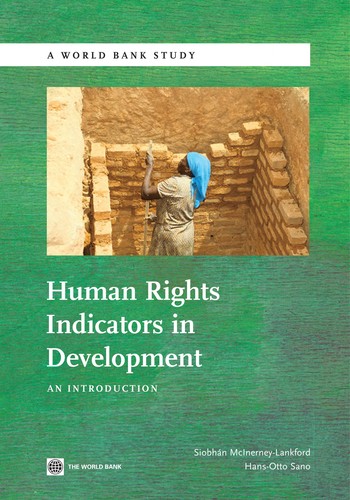
Human Rights Indicators in Development
0
0
As an Amazon Associate and affiliate partner, Menrva Books earns from qualifying purchases. Learn more
Author Description
Human rights indicators are central to the application of human rights standards in context and relate essentially to measuring human rights realization, both qualitatively and quantitatively. They offer an empirical or evidence-based dimension to the normative content of human rights legal obligations and provide a means of connecting those obligations with empirical data and evidence and, in this way, relate to human rights accountability and the enforcement of human rights obligations. Human rights indicators are important for both assessment and diagnostic purposes: the assessment function of human rights indicators relates to their use in monitoring accountability, effectiveness, and impact; the diagnostic purpose relates to measuring the current state of human rights implementation and enjoyment in a given context, whether regional, country-specific, or local.^ This paper offers a preliminary review of the foregoing in the development context and a general perspective on the significance of human rights indicators for development processes and outcomes. It is not intended to be prescriptive and does not provide specific operational recommendations on the use of human rights indicators in development projects. Nor does it advocate a particular approach or mode of integrating human rights in development or argue for a rights-based approach to development. This paper is designed to provide development practitioners with a preliminary view on the possible relevance, design, and use of human rights indicators in development policy and practice. It also introduces a basic conceptual framework about the relationship between rights and development, including in the World Bank context.^ It then moves to methodological approaches on human rights measurement, exploring in general terms different types of human rights indicators and their potential implications for development at three levels of convergence or integration. The paper therefore offers a theoretical introd
Menrva's Summary
THE THESIS
This paper examines the role and application of human rights indicators within the broader context of development processes and outcomes. It explores how these indicators provide an empirical basis for understanding human rights realization, connecting normative obligations with measurable data, and supporting accountability mechanisms. The work is intended to offer development practitioners a foundational understanding of the relevance, design, and utilization of human rights indicators in policy and practice, including within the World Bank framework.
THE SCOPE MAP
- Conceptual framework on the relationship between rights and development.
- Methodological approaches to human rights measurement.
- Exploration of different types of human rights indicators.
- Discussion of the potential implications of indicators for development at three levels of integration.
- Preliminary review of human rights indicators in the development context.
- General perspective on the significance of human rights indicators for development processes and outcomes.
THE AUTHORITY PERSPECTIVE
This paper offers a theoretical introduction to human rights indicators in development, focusing on their assessment and diagnostic functions. It aims to provide development practitioners with a preliminary view on their relevance and use, without offering prescriptive operational recommendations. The work situates these indicators within the World Bank context and explores methodological approaches to their measurement and integration.
Page Count:
79
Publication Date:
2010-01-01
ISBN-10:
0821386042
ISBN-13:
9780821386040
Economics
Politics
Non-Fiction
Policy
Human rights
Methodology
Community Tags
Similar Books